Sawyer Micro Squeeze Water Filtration System Review
We tested the Sawyer Micro Squeeze with the Cnoc 750ml pouch. Here's everything you need to know before buying this compact filtration system.

Reviewed by
Seb and Michelle
We've tested over 6,500 products in the last 5 years – collaborating with over 4,000 brands and bringing our style of reviews to multiple platforms. Every video, every review and every post has started with a video we shot ourselves after testing these products. More about me →
This post contains affiliate links. I may earn a commission at no extra cost to you.
Quick Verdict
The Sawyer Micro Squeeze paired with the Cnoc 750ml squeeze pouch is one of the most compact, capable water filtration setups we’ve come across. It filters bacteria, microplastics, and sediment, it’s rated for 100,000 gallons, and you can drink straight from it like a straw. The back-flush cleaning process takes a few extra steps to get right, but once you do, this thing is so useful in so many different ways.
Buy if you:
- Hike, camp, or travel to areas where water quality is uncertain
- Live in a hurricane-prone zone and need a backup for when running water goes out
- Want a lightweight setup that lets you drink directly from the filter like a straw
- Need a filter that can be cleaned and reused rather than replaced constantly
Skip if you:
- The back-flush process requires a separate syringe and the blue adapter, if you lose either piece in the field, you can’t clean the filter on the go
- You want a gravity-fed or hands-free system; this one requires you to squeeze the pouch manually
- You need to filter more than 750ml at a time without refilling the pouch
Clicking takes you to the seller's website. We may earn a small commission if you purchase, at no extra cost to you.
Let Me Tell You Everything You Need to Know About This Sawyer Pouch
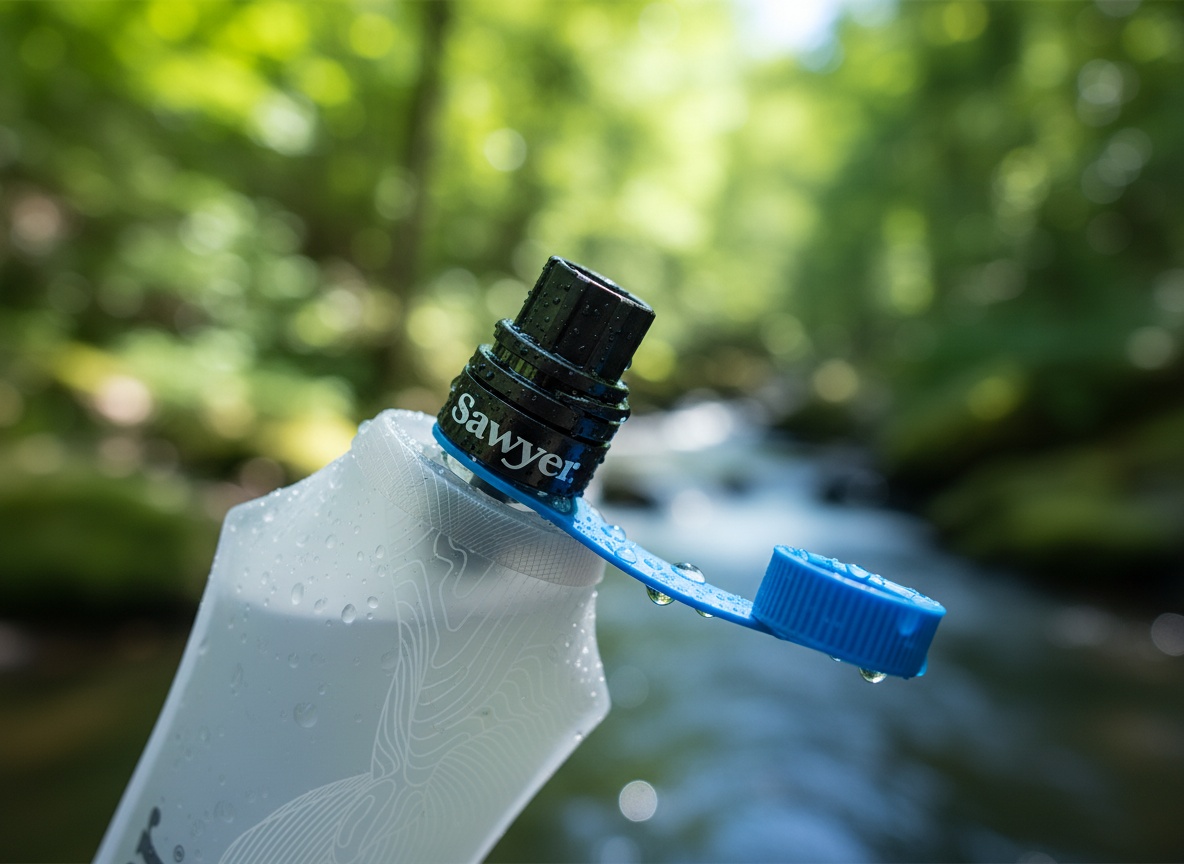
One of a kind. That’s the phrase that keeps coming up when looking at this setup. The Sawyer Micro Squeeze filter paired with a Cnoc 750ml squeeze pouch is compact, incredibly capable, and built for the kind of scenarios most people don’t want to think about until they’re already in them. We live on St. Martin, a small Caribbean island in a hurricane-prone zone. When a storm hits, clean running water isn’t guaranteed. That’s the exact situation that makes a tool like this Sawyer filtration system worth understanding inside and out, not just as a hiking accessory, but as a real emergency backup. The pouch holds 750 milliliters, just under a full liter, and every bit of that water gets pushed through the Sawyer filter before it ever touches your lips.
The whole premise here is simple: you fill the pouch from whatever water source is available, something that might have bacteria, microplastics, sediment, sand, or dirt, and then you squeeze or sip through the filter. What comes out the other end? Clean, drinkable water. The process is as straightforward as it sounds, and it works.
What’s in the Setup and How It Works
The kit centers on two pieces: the Cnoc 750ml collapsible soft pouch and the Sawyer Micro Squeeze filter. The pouch is flexible and designed to be squeezed, which is how you force water through the filter. The filter itself screws onto the pouch opening, creating a sealed connection so all the water has to pass through the filtration media before it exits.
Capacity-wise, the pouch holds 750 milliliters of water per fill. That’s your working volume. The filter, on the other hand, is rated for 100,000 gallons over its lifetime. Those two numbers together tell you a lot: the pouch is your limiting factor per use, but the filter itself is practically inexhaustible for any realistic scenario, camping weekends, long hikes, or extended emergency situations.
The filtration targets the things that actually matter in an emergency or outdoor context: bacteria, protozoa, microplastics, and physical sediment like sand and dirt. Fill the pouch, screw on the filter, and either squeeze the pouch or use it like a straw with direct suction. Both methods work. The straw method is a nice bonus, there’s no need to press hard onto it. Light suction pulls the water through just fine, and it comes out tasting clean.
Also included in the kit are a blue back-flush adapter and a small syringe. These are for cleaning the filter, which we’ll cover in a moment.
Squeezing It, Sipping It, Watching It Work
When you first push water through the filter, you’ll notice small bubbles forming as the water passes through. That’s not a defect. That’s the filtration happening. The water is being forced through multiple stages inside the filter body, and those bubbles are the visual confirmation that the system is doing its job. It’s one of those things that’s reassuring to see in person.
The squeeze method gives you control over flow rate. Press harder and the water comes out faster. But you don’t have to squeeze at all if you’d rather just drink directly. Light suction through the filter opening pulls water through cleanly. The flow is steady, not slow, and the taste is clean. Not “filtered water” flat or chemical-tinged. Just clean, normal-tasting water.
That matters more than it sounds. When you’re dealing with a water source that looks questionable, and in a post-hurricane situation on an island, that’s not hypothetical, the last thing you want is a filtration system that makes the water taste like it came from a hardware store. This one doesn’t. The taste is fine. More than fine, right?
The 100,000-gallon filter lifespan is the number that keeps standing out. That’s not a one-season consumable. That’s a filter you could potentially use for years across dozens of different situations without ever replacing the core filtration element. For the cost of entry, that’s remarkable value per gallon filtered.
The Back-Flush Step You Can’t Skip
Here’s the part that trips people up, and it’s worth understanding before you’re in the field trying to figure it out. Over time and with repeated use, the filter membrane picks up debris and needs to be cleaned. You can’t just rinse it under a tap and call it done. The correct method is back-flushing, pushing clean water through the filter in the reverse direction to clear out whatever has built up inside.
To do it: fill the syringe with clean water, attach the blue back-flush adapter to the filter in place of the pouch, connect the syringe to the adapter, and push the water backwards through the filter. You’ll see water flush out the other end. Boom. That’s the filter cleared and ready to go again.
The catch? You need clean water to back-flush. If you’re in a situation where clean water isn’t available, you obviously can’t clean the filter at that moment. The process also requires that you keep both the blue adapter and the syringe with the kit. Neither piece is large, but if you’re packing light and one of them gets left behind or lost, you lose the ability to clean the filter mid-trip. It’s not a deal-breaker by any stretch, but it’s a step that requires a little planning upfront. The cleaning process itself, once you understand it, takes maybe a couple of minutes and leaves the filter performing like new.
The back-flush step is also the part of the setup that takes the longest to feel comfortable with on first use. Reversing the direction of water flow sounds simple, but figuring out the adapter orientation for the first time takes a beat. Once it clicks, it’s fast. That first time though? Give yourself a minute.
Learn more
Sawyer Micro Squeeze Water Filter
Get the best price on Amazon →This post contains affiliate links. I may earn a commission at no extra cost to you.

Who Should Actually Pack This
The obvious answer is hikers and campers. Anyone heading into terrain where the water source situation is unpredictable needs something like this. A 750ml pouch and a filter that weighs next to nothing takes up almost no space in a pack, and the tradeoff, having access to drinkable water from any source, is a no-brainer.
But the less obvious answer is people preparing for emergencies at home. We mentioned it in the review because it’s real for us: living on a Caribbean island means hurricane season is a fact of life. Running water can disappear for days or weeks after a major storm. A filter like this, stored in an emergency kit alongside a couple of filled pouches, means you’re not scrambling for bottled water or relying entirely on whatever the local stores have left.
Travelers going to destinations where tap water quality is uncertain would get a lot of use from this too. The pouch is soft and collapsible, so it takes up almost no space when empty. You’re not adding bulk to a carry-on. You fill it when you need it, filter it, drink it, and collapse it back down.
One thing worth noting about the 750ml capacity: it’s not the right tool if you need to filter large volumes quickly for a group. It’s a personal filtration system. One pouch, one person, one fill at a time. For solo or paired use, the throughput is completely fine. For a family of four needing water all day, you’d be refilling constantly. Keep that context in mind when deciding if this kit fits your situation.
Tips Before Your First Use
Run clean water through the filter before using it for the first time. This clears out any manufacturing residue and primes the membrane. It takes about a minute and makes the first real use cleaner right from the start.
Keep the blue back-flush adapter and the syringe together with the filter. They’re small enough to tuck into a side pocket or a small ziplock bag. But if they get separated from the main kit, you lose the cleaning capability until you regroup. Keep them together. Simple rule, easy to forget.
Practice the back-flush process once at home before your first trip. Doing it for the first time in the field when you need the filter working again isn’t the moment to be figuring out the adapter orientation. Five minutes at home saves real frustration later.
And when you’re drinking directly via straw suction, don’t overthink the flow. Light suction is enough. The filter doesn’t require hard pulling. Let it work at its own pace and the water comes through steadily without any effort.
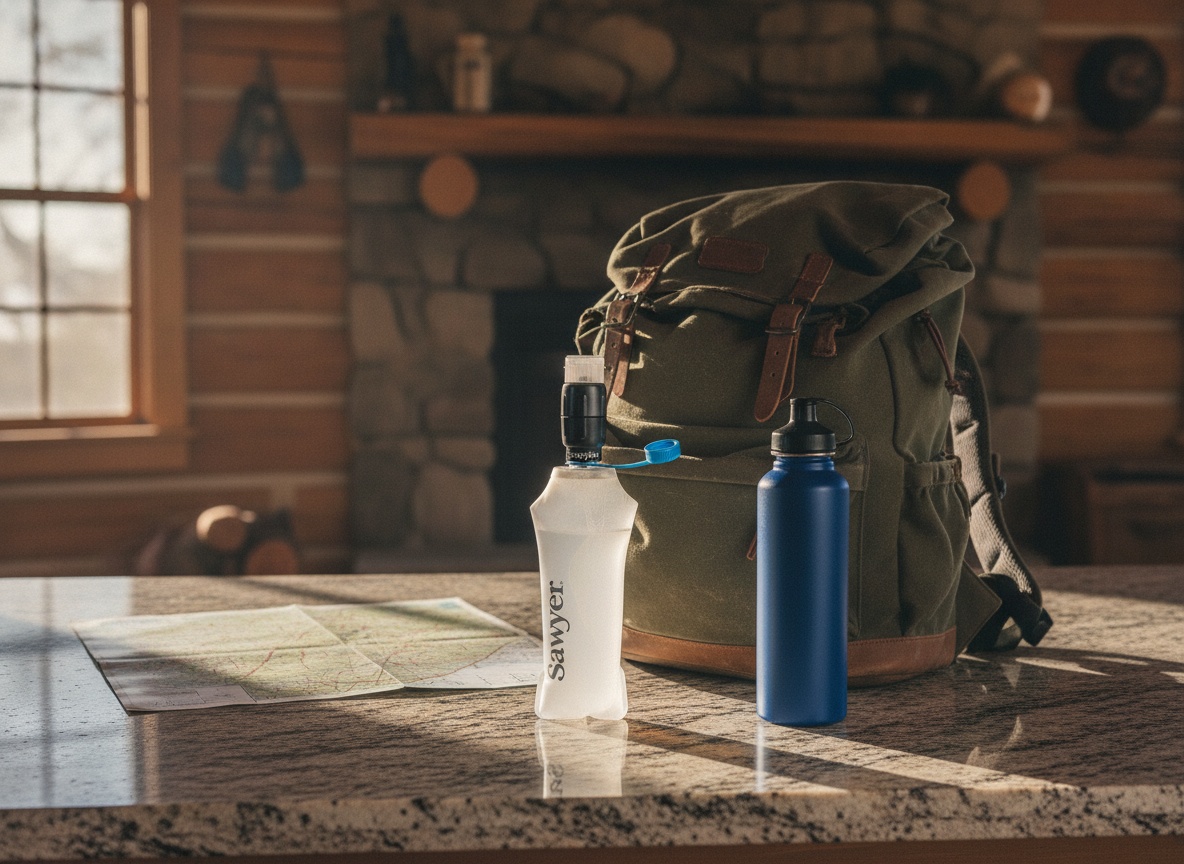
Check the current price on Amazon here before you decide. Pricing on this kind of gear shifts, and it’s worth knowing what you’re actually paying for a setup rated to last 100,000 gallons.
Frequently Asked Questions
Does the Sawyer Micro Squeeze filter viruses?
The Sawyer Micro Squeeze is not rated to filter viruses, it targets bacteria, protozoa, and microplastics. If you’re traveling to regions where viral contamination of water sources is a concern, you’d need a filter with a 0.01-micron rating or chemical treatment in addition to this system. For most camping, hiking, and North American emergency prep scenarios, the bacterial and protozoa filtration this provides is what you actually need.
How often do I need to back-flush the filter?
Back-flush whenever the flow rate starts to slow down noticeably. There’s no fixed interval, it depends entirely on how turbid (murky) the water sources you’re filtering are. Filtering silty or sediment-heavy water will clog the membrane faster than filtering relatively clear water. A quick back-flush restores flow and keeps the filter performing well.
Can I use the Cnoc 750ml pouch with other Sawyer filters?
The Cnoc pouch uses a standard Sawyer-compatible thread, so it works with other Sawyer filter models that share the same connection spec. That said, the Micro Squeeze is specifically sized and weighted to pair well with compact pouches like the Cnoc. Check the thread compatibility of whichever Sawyer filter you’re considering before assuming it’ll fit.
What happens if the filter freezes?
Freezing is a known risk for hollow-fiber water filters including Sawyer’s lineup. If water trapped inside the membrane freezes, it can crack the fibers and permanently compromise the filter, and there’s no way to know the damage happened just by looking at it. If you’re in freezing conditions, keep the filter close to your body to prevent it from getting cold enough to freeze.
Is there a warranty on the Sawyer Micro Squeeze?
Sawyer backs their filters with a lifetime warranty against manufacturing defects. That applies to the filter element itself. The Cnoc pouch is a separate product from a different brand and carries its own warranty terms, so check those independently if the pouch is a concern.
Does this work for saltwater filtration?
No. The Sawyer Micro Squeeze is not a desalination system and cannot remove salt from seawater. It removes biological contaminants, microplastics, and sediment from fresh water sources. For saltwater or heavily chemically polluted water, you’d need a completely different type of filtration technology.
Learn more
Sawyer Micro Squeeze Water Filter
Get the best price on Amazon →This post contains affiliate links. I may earn a commission at no extra cost to you.
Related reviews
- Wavy Talk Pro Hair Dryer Review: Dry Hair in Under 2 Minutes
- Sawyer 20% Picaridin Insect Repellent Spray Review
- Cordless Handheld Car Vacuum: Suction Power & Pet Hair
About the reviewer
Seb and Michelle
We've tested over 6,500 products in the last 5 years - collaborating with over 4,000 brands and bringing our style of reviews to multiple platforms. Every video, every review and every post has started with a video we shot ourselves after testing these products.