RunStar Smart Scale Review: Best Budget Scale?
We tested the RunStar Smart Scale — 28 metrics, 8-electrode dual-frequency BIA, and app sync. Here's whether it's worth it.

Reviewed by
Seb and Michelle
We've tested over 6,500 products in the last 5 years – collaborating with over 4,000 brands and bringing our style of reviews to multiple platforms. More about me →
This post contains affiliate links. I may earn a commission at no extra cost to you.
Quick Verdict
The RunStar Smart Scale punches well above its price bracket. Between the 8-electrode dual-frequency BIA system, 28 tracked metrics, and a genuinely useful app, this is a serious body composition tool — not a fancy bathroom accessory. If you want data that actually moves the needle on your fitness decisions, this is worth a close look.
Buy if you:
- Want more than just a weight number — muscle mass, visceral fat, BMI, and 25 more metrics matter to you
- Are tracking long-term body recomposition, not just short-term weight loss
- Use Apple Health, Fitbit, or Health Connect and want seamless data sync
- Have multiple people in your household who want individual profiles with auto-recognition
Skip if you:
- Only care about a single weight number and have zero interest in app tracking
- Need clinical-grade body composition accuracy for medical use
- Don’t want to deal with an app at all — even though offline mode exists, the full value is in the software
A Budget Scale That’s Actually Asking Serious Questions
Most people buy a scale to check their weight. That’s it. A number, maybe once a week, maybe every morning, and then a vague sense of progress or frustration depending on the day. What the RunStar Smart Scale is doing is a different thing entirely. It’s asking: what’s that weight actually made of?
And that’s the right question. Because weight alone tells you almost nothing useful about your fitness. You could be gaining muscle while losing fat and the scale could sit completely still — and without body composition data, you’d think you’d stalled out. The RunStar is built specifically to solve that problem. Twenty-eight metrics, an 8-electrode dual-frequency BIA system, app sync, and a price point that puts it well within reach for anyone who’s been putting off upgrading from a basic bathroom scale.
We cover this in full in the video above. But if you want the breakdown in writing, here’s everything you need to know before you click that buy button. Check the current price on Amazon here — it’s Amazon’s Choice in its category and FSA/HSA eligible, which is a nice bonus.
What the 8-Electrode System Actually Changes
Here’s where the RunStar separates itself from the flood of cheap smart scales on Amazon. Most budget scales use a 4-electrode BIA setup — two contacts for each foot. That measures impedance from your lower body only. It then estimates the rest. That’s a significant source of error, and it’s why a lot of people have had frustrating experiences with smart scales that seem inconsistent.
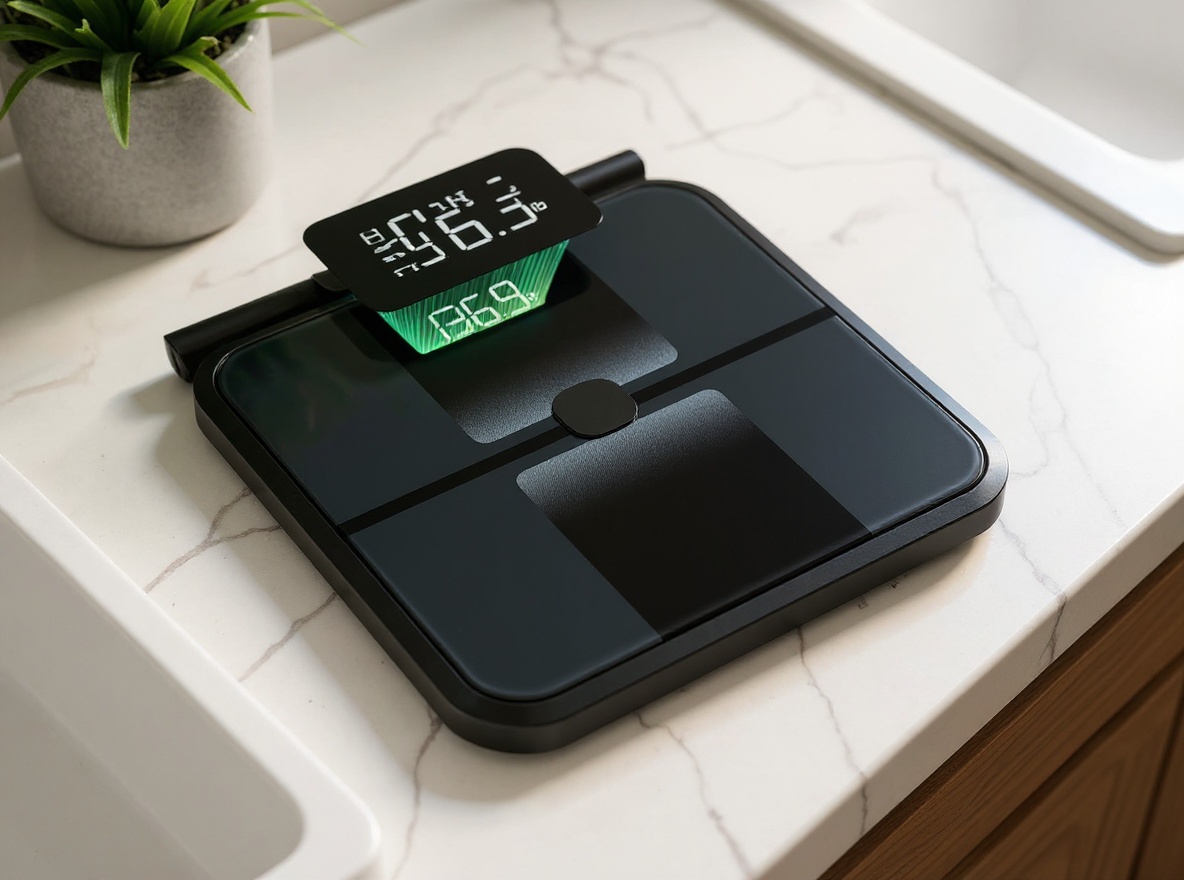
The RunStar uses an 8-electrode, dual-frequency BIA system. Eight contact points, capturing upper and lower body impedance separately. That dual-path measurement gives the algorithm far more data to work with — and the result is a more complete picture of what’s happening in your body, not just from the waist down.
Dual-frequency matters too. Single-frequency BIA sends one electrical signal through your body. Dual-frequency sends two — one at a lower frequency that travels mostly through fluids, and one at a higher frequency that passes through cell membranes. Together, they allow for a better estimate of body water, which feeds directly into the accuracy of fat and muscle readings. This is technology you’d typically see at a higher price tier. Finding it in a scale at this price point is one of the things that makes this worth talking about.
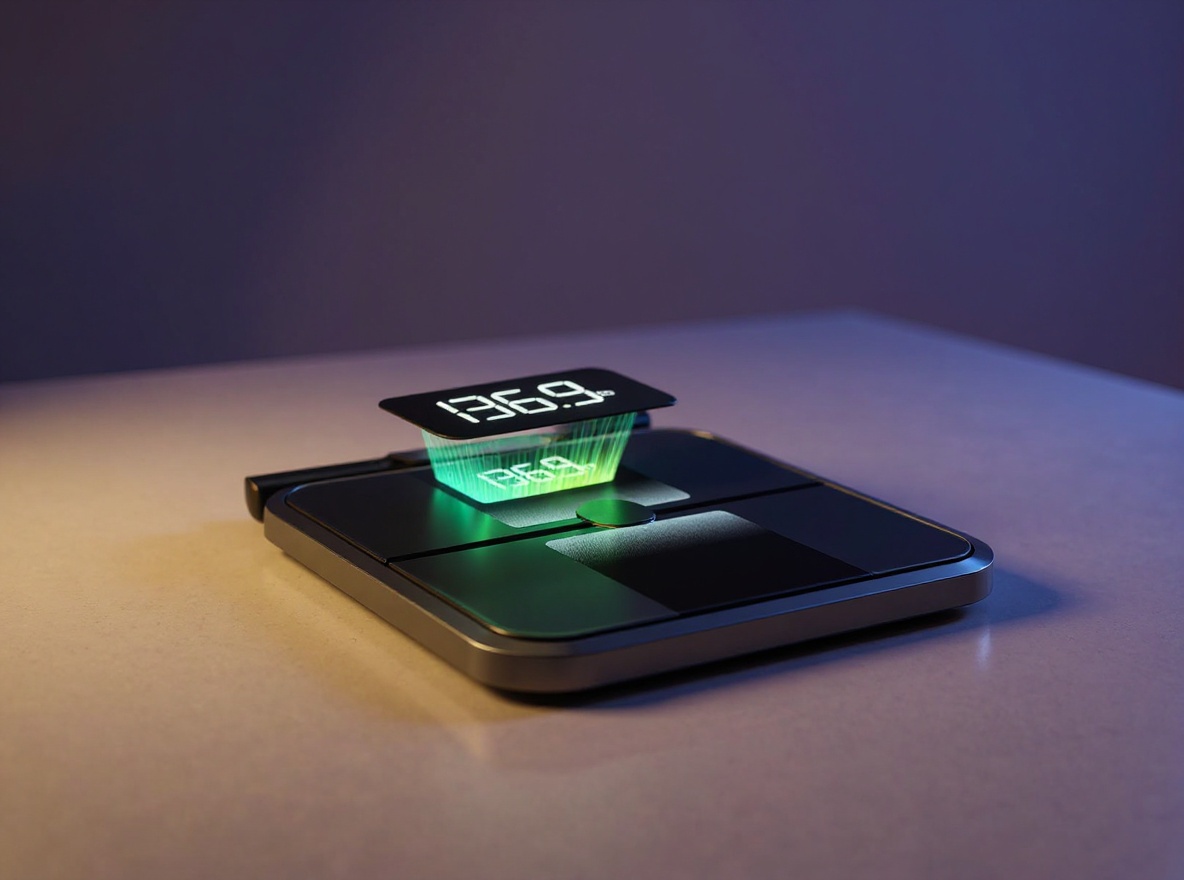
The platform itself is 300×300 mm — a solid, full-sized footprint. High-strength ABS material. Non-slip feet. There’s a retractable cable built in. The LED display auto-rotates through Weight, Body Fat, and BMI so you get key numbers at a glance without needing to open the app every single time. It supports up to 400 lb capacity with 0.1 lb increments, so it covers a wide range of users.
The sensor area has an ITO coating — that’s the same transparent conductive material used in touchscreens. It helps with electrode contact quality, which matters for BIA accuracy. Small detail, but it’s the kind of spec choice that signals the engineering team was paying attention.
28 Metrics and the Starfit App
Twenty-eight body composition metrics is a big number. Let’s be clear about what that actually means in practice. The core readings you’ll care about are: Body Weight, Body Fat Percentage, BMI, Visceral Fat, Muscle Mass, and Body Water. Those six are the ones most fitness-focused users check regularly. The rest of the 28 fill in the picture — things like Bone Mass, Metabolic Age, Subcutaneous Fat, Protein, and segment-specific muscle and fat readings that break down your body by region.
That segmental data is where the 8-electrode system earns its keep. Because you’re measuring upper and lower body separately, the scale can give you a rough breakdown of muscle distribution across different parts of your body. That’s useful if you’re trying to identify imbalances or track whether your training is building the right areas.
The Starfit app is what ties it all together. It stores all your data, generates trend charts, lets you set health goals, and produces health reports you can actually use to understand your progress over time. One thing worth calling out: there’s offline mode. You can step on the scale without your phone nearby, and it’ll store the data and sync the next time you connect. That’s more convenient than it sounds — especially first thing in the morning when you don’t want to fumble for your phone just to get a reading logged.
The app syncs with Apple Health, Fitbit, and Health Connect. So if you’re already using any of those platforms to track other fitness data, your scale readings feed straight in. No manual entry. No separate dashboard to manage. It all lands in one place.
Multiple user profiles with auto-recognition rounds out the household usability. The scale can identify which user is stepping on it based on the measurement data, and log accordingly. There are also dedicated modes for specific use cases: Pregnancy mode, Child mode, and Baby mode (the baby mode typically involves a parent holding the child and weighing the difference). That’s a level of versatility that covers a lot of different household setups.
The GRS Certification Nobody’s Talking About
This one caught our attention when we were looking through the product details. The RunStar Smart Scale carries GRS certification — Global Recycled Standard. That means at least 50% of the material it’s made from is recycled content, and the certification verifies that claim independently. It also covers chemical safety and labor conditions in the supply chain.
For most people buying a budget scale, sustainability probably isn’t the top decision factor. But it’s a real credential, not a marketing badge. It’s independently verified. And in a product category full of cheap plastic items that nobody thinks twice about, it’s worth flagging as something RunStar is doing differently from most of its competitors at this price point.
FSA and HSA eligibility is the other detail that often gets buried in the listing. If you have a flexible spending account or health savings account, this scale qualifies. That can effectively bring your out-of-pocket cost down meaningfully, depending on your account balance. Worth checking before you pay full price. See the current price and availability on Amazon to confirm eligibility details on the listing.
Learn more
RunStar Smart Scale
Get the best price today →This post contains affiliate links. I may earn a commission at no extra cost to you.

Who This Scale Is Built For
There’s a specific kind of person this scale is ideal for. If you’ve been working out consistently — lifting, running, whatever your thing is — and you’ve hit a point where the basic scale number isn’t giving you useful feedback anymore, this is your next step. Watching your body fat percentage trend down over three months while your muscle mass holds steady is real information. A regular scale can’t give you that.
People coming off a weight loss phase who are now focused on recomposition will get a lot of value here. Same for anyone who’s starting a new training program and wants a genuine baseline to measure from. The 28 metrics mean you’re not guessing. You have numbers to track.
Households with multiple users benefit from the auto-recognition feature. Each person builds their own trend data over time, and no one is sharing a single profile or manually selecting their name every morning. It just works quietly in the background.
The pregnancy, child, and baby modes extend the utility further. If you have a young family and want one scale that handles different needs at different life stages, the RunStar covers it without requiring you to buy separate products.
Where it’s less of a fit: if your primary use case is purely weight tracking and you have zero interest in metrics or apps, you’re paying for features you won’t touch. A basic scale would serve you fine and cost less. And if you need clinically precise body composition data — the kind used in medical or research settings — a consumer BIA scale isn’t the tool for that regardless of price. Know what you’re buying it for.
RunStar vs. the Withings Body Comp
The Withings Body Comp is the other scale that comes up in this conversation. It’s a well-regarded product with a long track record, solid app integration, and brand recognition that the RunStar doesn’t have yet. It also costs considerably more. So the comparison is worth making directly.
The Withings Body Comp uses a similar multi-electrode BIA approach and tracks comparable metrics. Its biggest strengths are brand ecosystem — if you’re already in the Withings Health Mate world — and a few premium features like nerve conduction assessment and cardiovascular health scores that you don’t get from the RunStar.
But here’s the thing. For the vast majority of users who want body fat percentage, muscle mass, visceral fat, and a clean app with trend tracking, the RunStar covers all of it. The gap in everyday utility between these two products is much smaller than the gap in price. If you’re not a health data enthusiast who wants every possible metric and deep Withings ecosystem integration, the RunStar gets you 80-90% of the outcome for a fraction of the spend.
The other comparison is to the flood of basic smart scales at lower price points that show up when you search Amazon. Those typically use 4-electrode single-frequency BIA. They track fewer metrics, with less accuracy, and their app support ranges from mediocre to actively frustrating. The RunStar’s 8-electrode dual-frequency system is a meaningful step up from that category — not just in the spec sheet, but in the practical reliability of what you’re measuring. That’s the tier comparison that matters most here.
Setup, Placement, and Getting the Most Out of It
Download the Starfit app before you step on the scale for the first time. Set up your profile with accurate height, age, and sex — the BIA algorithm uses this to calibrate your readings, so garbage in means garbage out. Take your time filling that in correctly.
Place the scale on a hard, flat surface. Not carpet. Not a soft mat. Hard floor only — tile, hardwood, whatever you have. BIA accuracy on a soft surface degrades because the platform can flex slightly under load, which changes how current travels through the electrodes. Small thing, big impact on consistency.
Weigh yourself at the same time of day, under the same conditions. Ideally first thing in the morning, after using the bathroom, before eating or drinking anything. Body composition metrics — especially body water and fat percentage — fluctuate throughout the day based on hydration, meals, and activity. You’re not trying to get a perfect snapshot. You’re building a trend line. Consistency in when and how you weigh is what makes the trend data reliable.
One more thing: don’t obsess over single readings. A single day’s body fat percentage number is not the point. The point is what that number does over weeks and months. That’s where the Starfit app earns its keep — the trend charts make the progress visible in a way that individual readings never can.
If you have multiple people in your household, have everyone set up their profiles before anyone starts using it consistently. The auto-recognition works by comparing your weight and body composition estimates against stored profiles, so it needs to know who everyone is before it can sort out who’s who reliably.
The retractable cable is there for the electrode connection. Keep it clean and make sure it’s properly seated before stepping on. The ITO-coated sensor area works best with bare, clean, dry feet — no lotion on the bottoms of your feet right before stepping on, and no socks. The current needs a clean path.
Frequently Asked Questions
How accurate is the RunStar Smart Scale compared to a DEXA scan?
No consumer BIA scale matches DEXA scan accuracy — that’s just the reality of the technology. What the RunStar gives you is consistent relative accuracy, which is what actually matters for tracking progress over time. If your body fat reads 22% today and 19.5% in three months, that change is real and meaningful, even if the absolute number isn’t lab-perfect.
Can multiple people use the same scale without mixing up their data?
Yes. The RunStar supports multiple user profiles with auto-recognition, so it identifies which person is stepping on based on the measurement data and logs accordingly. Set up each profile correctly from the start and it handles the sorting automatically. No manual selection needed each time.
Does it work without a phone nearby every time?
It does. There’s an offline mode built in — step on the scale, get your reading on the LED display, and the data syncs to the Starfit app the next time your phone is in range. You don’t need to have Bluetooth active or your phone in the bathroom for every single weigh-in.
Is the RunStar Smart Scale FSA or HSA eligible?
Yes, it’s listed as FSA/HSA eligible on Amazon. That means you can use pre-tax flexible spending or health savings account funds to cover the purchase. Check the current listing to confirm, as eligibility details can update.
What apps does it sync with besides the Starfit app?
It syncs with Apple Health, Fitbit, and Health Connect. If you’re already using any of those to aggregate your fitness data, your RunStar readings feed in automatically — no manual logging required.
Is the pregnancy mode safe to use?
The pregnancy mode adjusts how the scale processes and displays readings to account for the changes in body composition during pregnancy. That said, we’d always recommend checking with your doctor or midwife before using BIA-based measurement during pregnancy, as the electrical current involved is very low but the guidance varies by individual situation.
Related reviews
- GoveeLife Smart Water Leak Detector Review: Catch Hidden Leaks Before They Cost You Thousands
- YOSUDA Exercise Bike Review: Best Budget Indoor Cycling Bike for Home Workouts?
How does it hold up on different types of flooring?
Hard floors — tile, hardwood, laminate — are ideal. Carpet throws off BIA readings because the platform can flex, which affects measurement consistency. The non-slip feet keep it stable on hard surfaces. Stick to a flat, hard floor for your regular weigh-ins and your data will be far more reliable.
Learn more
RunStar Smart Scale
Get the best price today →This post contains affiliate links. I may earn a commission at no extra cost to you.
About the reviewer
Seb and Michelle
We've tested over 6,500 products in the last 5 years - collaborating with over 4,000 brands and bringing our style of reviews to multiple platforms.