Rechargeable Motion Sensor Under-Cabinet Lights
We reviewed these rechargeable motion sensor under-cabinet LED lights — 2-pack, no tools, no wiring. Here's what the specs actually deliver.

Reviewed by
Seb and Michelle
We've tested over 6,500 products in the last 5 years – collaborating with over 4,000 brands and bringing our style of reviews to multiple platforms. More about me →
This post contains affiliate links. I may earn a commission at no extra cost to you.
Quick Verdict
These rechargeable motion sensor under-cabinet lights are a solid, no-fuss lighting upgrade — especially if you’re renting and can’t touch the wiring. Two color temperature options in one bar, five dimming levels, and a magnetic or adhesive mount that leaves zero permanent marks. The plastic build is what it is at this price, but the feature set punches above it.
Buy if you:
- Rent and can’t drill or hardwire anything
- Need motion-activated light in dark cabinets, pantries, or closets
- Want adjustable brightness and color temperature in one bar
- Need a quick lighting fix that charges via USB and installs in minutes
Skip if you:
- Need something near a sink or any wet area — these aren’t water resistant
- Want lights that run all day without recharging at max brightness
- Prefer a hardwired, permanent fixture with a cleaner look
Rechargeable Under Cabinet Lights With Motion Sensor Technology
Dark kitchen cabinets. A closet where you’re basically guessing what color everything is. A hallway that flips between full-on bright and pitch black depending on whether you remembered to hit the switch. These are low-priority annoyances until they’re not — and when you go looking for a fix, the options usually involve drilling, wiring, or calling someone in. These rechargeable LED under-cabinet motion sensor lights pitch themselves as the answer for anyone who doesn’t want to deal with any of that. No tools. No electrician. No landlord conversation. We looked into exactly what you’re getting with this 2-pack and whether the specs hold up to the promise.
The title says it all: simple enough for renters. That’s a specific claim and we’re going to break down whether the product actually backs it up.
What’s Packed Into This Bar
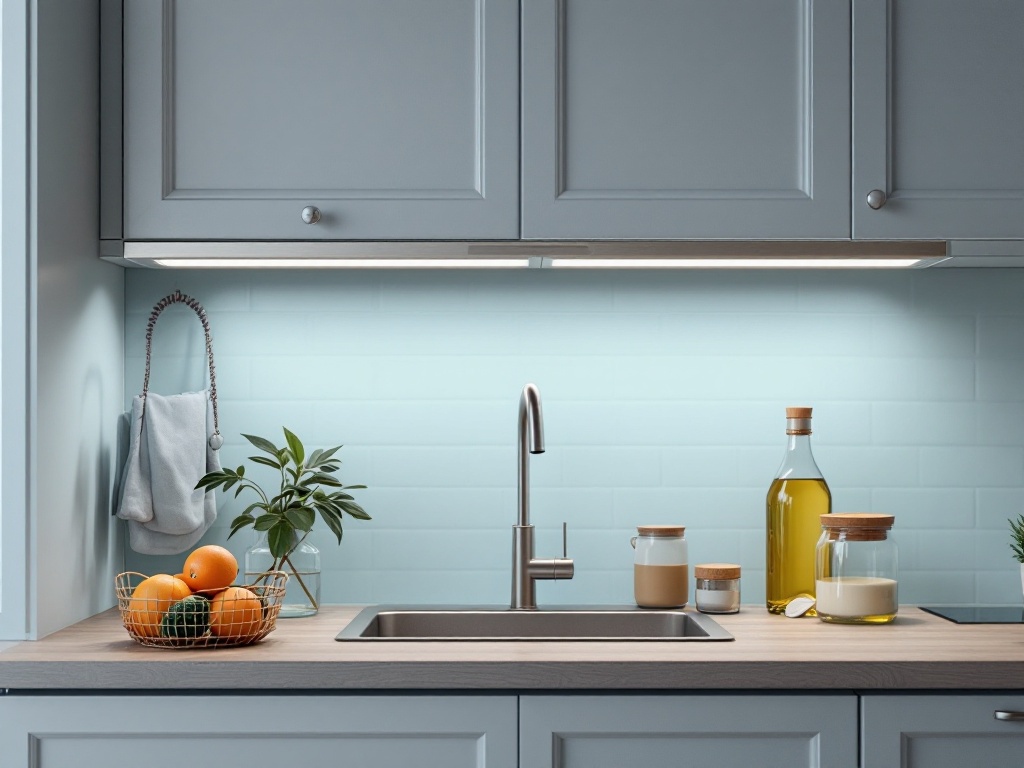
Let’s start with the hardware. Each light bar runs 64 LED beads and puts out 200 lumens. That’s not a floodlight, but for under a cabinet or inside a closet, 200 lumens is genuinely useful — it’s enough to see what you’re doing without washing out the whole room.
Color temperature is where this thing surprises you. You get three options: Warm White at 3000K, Natural Light at 4500K, and Cool White at 6000K. That’s the full range from cozy evening ambiance to crisp task lighting. Pair that with five brightness levels from 10% all the way up to 100%, and you have a light bar with a lot more flexibility than the price suggests.
The motion sensor covers a 10-foot range at a 120-degree angle and shuts off automatically 20 seconds after motion stops. That auto-off behavior is actually what makes a rechargeable light viable long-term — you’re not draining the battery every time you forget to turn it off. There’s also an Always-On mode if you need continuous light instead of triggered light.
Battery-wise, the 1800mAh cell charges in 1.5 hours. At max brightness it runs for up to 5 hours. Drop it down to minimum brightness and that number climbs to 40 hours. So if you’re using this as motion-activated lighting at a sensible brightness level, you’re not going to be charging it every other day.
Mounting is either magnetic — snap it onto any metal surface — or adhesive tape for non-metal surfaces. No screws, no brackets, no hardware at all. And it’s removable, which matters a lot if you’re renting.
How the Motion Sensor Holds Up in Real Use
The 10-foot, 120-degree motion detection range is actually generous for under-cabinet or closet use. Most of the time you’re within a few feet of the light when you need it — stepping up to the counter, opening a cabinet door, walking into a closet. So the sensor triggers well before you’d even expect it to.
The 20-second auto-off is quick but reasonable. Quick enough that it doesn’t leave the light burning for minutes after you’ve left the area. That’s the right balance for battery conservation. If you need it on longer or continuously, that’s what the Always-On mode is for.
One thing to keep in mind: these are not water resistant. That’s a clear line in the spec sheet. Under the kitchen cabinet above a prep area? Fine. Mounted above or near the sink where there’s steam and splash? That’s a problem. The product page specifically excludes wet environments, so this is a dry-space-only light bar. Bathrooms, humid laundry rooms, any spot near running water — all off the table.
For closets, pantries, hallways, basements, and stairwells though, the motion activation logic is exactly what you want. The light comes on when you need it and turns itself off when you don’t. That’s the whole pitch, and the specs support it.
The Color Temperature Thing Is Underrated
Most budget light bars come in one color temperature. You pick warm or cool when you order, live with it, and that’s that. Having three on-bar options — 3000K, 4500K, and 6000K — is a detail that makes a real difference depending on where you put it.
In a kitchen, 4500K natural light is usually the right call. It’s clear without being harsh, and it makes it easy to see what you’re cutting, reading, or reaching for. In a closet, you might want 6000K cool white so colors read accurately. In a bedroom nook or a hallway at night, 3000K warm white won’t jolt you awake when the sensor fires.
The fact that you can switch between these on the same bar — without buying a different product for each room — is a feature that doesn’t get enough attention in product descriptions. It means one light bar can serve a different purpose depending on where you need it most. That flexibility matters when you’re buying a 2-pack and placing them in two different environments.
The 5-level dimming (10% through 100%) ties into this too. Running at 10% in a hallway for a soft middle-of-the-night light is a completely different use case from running at 100% in a dark pantry for actual task lighting. Both are covered.
Learn more
Rechargeable Motion Sensor Cabinet Lights
Get the best price today →This post contains affiliate links. I may earn a commission at no extra cost to you.

Renters vs Homeowners: Who Gets More Out of This
Renters are the obvious audience. No holes in the wall, no adhesive that tears drywall on the way out, no evidence you ever touched anything when the lease ends. The magnetic mount option is completely non-destructive on metal surfaces, and the adhesive tape option is designed to be removable. That’s a meaningful promise for anyone who’s done the “damage deposit math” before putting a single nail in a wall.
But homeowners have reasons to reach for these too. Retrofit lighting in older kitchens that weren’t wired for under-cabinet fixtures is expensive and disruptive. Running a USB cable to charge a light bar every week or two is a much lower barrier than tearing open drywall. Same goes for supplemental closet lighting — if your closet doesn’t have a dedicated fixture and you don’t want to add one, a rechargeable bar on adhesive tape solves the problem in ten minutes.
Basements and stairwells are strong use cases too. Motion-activated lights in those spaces mean you don’t have to fumble for a switch in the dark, and the 10-foot sensor range is more than enough coverage for a typical stairwell or landing.
Where it gets less useful: anyone who wants a permanent, always-on lighting solution that looks fully integrated. This is a light bar on tape or magnets. It’s practical, not architectural. If the aesthetic of a custom-wired under-cabinet fixture matters to you, this product is a stopgap at best.
Rechargeable vs Hardwired: The Real Trade-Off
The direct comparison here is between rechargeable, adhesive-mount light bars like this one and hardwired under-cabinet LED strips. Both put light where you need it. The trade-offs are installation complexity versus maintenance freedom.
Hardwired strips look cleaner, run indefinitely, and never need charging. But they require either hiring an electrician or knowing what you’re doing with low-voltage wiring. They’re also permanent — great if you own, complicated if you rent or move often.
These rechargeable bars charge in 1.5 hours and run anywhere from 5 hours (max brightness) to 40 hours (minimum brightness). If you’re using motion activation at a mid-level brightness, you’re realistically looking at a charge every week or two depending on usage frequency. That’s an occasional inconvenience. Not a deal-breaker, but worth knowing before you commit.
The other competition is plug-in under-cabinet LED bars. Those don’t need recharging but they require an outlet nearby and leave a visible cord. Rechargeable wireless lights remove the cord entirely. In a cabinet where there’s no outlet and you don’t want to run a cord along the backsplash, wireless rechargeable wins on practicality every time.
So the trade-off table looks like this: rechargeable bars offer more placement flexibility and zero installation commitment, while hardwired or plug-in options offer zero maintenance. Pick based on your situation.
Before You Mount These
The product page specifically recommends a full charge before first use. That’s standard advice for lithium batteries and it’s worth following — don’t skip it just because the bar came with some charge out of the box.
For placement, think about the sensor angle before you stick anything down. The 120-degree detection angle means you want the bar positioned so the sensor faces the approach path — not pointing straight up into a shelf or directly at a wall. A few inches of positioning thought before you peel the adhesive backing saves you from resticking it.
If you’re using the adhesive mount, clean the surface first. Dust and grease are the reason adhesive fails — and kitchen cabinet undersides are exactly the surface that collects both. Wipe it down, let it dry, then apply. The mount will hold a lot better and you’ll avoid the annoying middle-of-the-night clatter of a light bar dropping off a cabinet at 3am.
One thing that doesn’t get mentioned enough: these aren’t water resistant. Keep that front of mind if you’re mounting near a stove or sink. Steam and humidity will shorten the life of any electronics, and the spec sheet is clear that water resistance isn’t part of this product’s feature set. Pantry, closet, bedroom, hallway, basement — all fine. Anything damp, stay away.
And check the current price on the product page — pricing on Amazon shifts regularly, so what you see in the listing may be better or worse than when we last looked. See today’s pricing right here.
Frequently Asked Questions
How long does the battery last between charges?
Up to 5 hours at maximum brightness (100%) and up to 40 hours at minimum brightness (10%). In motion-sensor mode at a mid-range brightness level, most people will be charging these roughly once a week depending on how often the sensor fires. The 1.5-hour charge time means it’s quick to top up when you do need it.
Will these work in a bathroom?
No. These light bars are not water resistant. Steam, humidity, and any kind of splash are risks. Stick to dry spaces — cabinets, closets, pantries, hallways, basements, and stairs are all appropriate. The sink area and shower-adjacent walls are not.
Can you use these without motion sensing — just as a regular light?
Yes. There’s an Always-On mode in addition to the motion-sensing mode. So if you need continuous light rather than triggered light — say, under a cabinet where you’re working for an extended stretch — you can switch it over. Just keep the battery life limits in mind when running at full brightness continuously.
How does the mounting work and is it really renter-safe?
Two options: magnetic mount for metal surfaces (completely tool-free and leaves nothing behind) or adhesive tape for non-metal surfaces. The adhesive is designed to be removable, which is the key renter-friendly feature. Clean the surface before applying and it’ll hold properly — and come off without tearing drywall or finish when it’s time to leave.
Does the color temperature actually change on the bar or do you have to buy separate lights?
It changes on the bar itself. You get Warm White (3000K), Natural Light (4500K), and Cool White (6000K) selectable via the push button — no separate purchase needed. That’s one of the better features of this bar versus cheaper alternatives that come fixed in a single color temperature.
Related reviews
- Foldable Dog Pool Review: Built-In Sprinkler, LED Lights, No Inflation Needed
- 2-in-1 Insulated Water Bottle with LED Lantern: Clever Camping Gear or Gimmick?
- ORMEO HOME Cold Press Juicer Review: Is It Really the Best?
Is 200 lumens actually enough for kitchen task lighting?
For supplemental under-cabinet lighting in a typical kitchen, 200 lumens per bar is functional. It’s not a replacement for overhead lighting, but it’s enough to clearly illuminate a countertop prep area or see inside a cabinet. If you’re placing both bars from the 2-pack in the same run, you’re getting 400 lumens total, which makes a more noticeable difference.
Learn more
Rechargeable Motion Sensor Cabinet Lights
Get the best price today →This post contains affiliate links. I may earn a commission at no extra cost to you.
About the reviewer
Seb and Michelle
We've tested over 6,500 products in the last 5 years - collaborating with over 4,000 brands and bringing our style of reviews to multiple platforms.