The benefits of choosing hard shell luggage instead of soft shell
Discover the real benefits of choosing hard shell luggage instead of soft shell, from crush-proof durability to lightweight polycarbonate builds, plus our honest picks at every price.

Reviewed by
Seb and Michelle
We've tested over 6,500 products in the last 5 years – collaborating with over 4,000 brands and bringing our style of reviews to multiple platforms. More about me →
Disclosure: This post contains affiliate links. If you buy through them, I may earn a small commission at no extra cost to you.
The benefits of choosing hard shell luggage instead of soft shell come down to three things: better protection for your stuff, a sleek structure that holds up to rough baggage handling, and modern materials that are far lighter than most people expect. If you check bags regularly or travel with anything remotely fragile, a hard shell is almost always the smarter call.
Why We Switched to Hard Shell and Never Looked Back
A few years ago I grabbed an Away suitcase on a whim, mostly because it was everywhere online and looked really good in pictures. I had no strong feelings about hard shell vs. soft shell at the time. But after one international trip where my checked bag came back looking like it had been through a washing machine tumble (wet tarmac, stacked under someone else’s golf bag, the whole ordeal), I became a hard shell convert overnight.
The thing nobody warns you about? Once your suitcase goes into the belly of the aircraft, it gets thrown, stacked, and occasionally rained on. A hard shell, especially one built from aerospace-grade polycarbonate, shrugs off that treatment far better than fabric. That was the moment I stopped caring about the occasional scuff on my Away and started caring a lot more about what was inside it arriving in one piece.
Then came the rabbit hole. We discovered Away first, fell in love, and then started wondering if there were more affordable options out there. Spoiler: there absolutely are, and some of them are really good.
A Brief History of Hard Shell Luggage (and Why Away Changed the Game)
Hard shell luggage has been around in one form or another for decades, but for most of that time it was synonymous with heavy aluminum cases favored by business travelers with expense accounts. The materials were stiff, the bags were bulky, and nobody was exactly lining up to check them at budget airline gates.
The real turning point came when polycarbonate became the dominant shell material. Polycarbonate is the best balance of durability, weight, and price. It flexes under impact rather than cracking. That flex-not-crack property changed everything. Suddenly hard shell bags could be genuinely light and genuinely tough at the same time.
Then Away showed up and made hard shell luggage cool for a new generation of travelers. Away launched in 2015 after founder Jen Rubio’s luggage broke in an airport in Switzerland. Her clothes and toiletries poured out of her suitcase and onto the airport floor. That frustrating moment led Rubio to team up with her former Warby Parker colleague Stephanie Korey. The two came up with the idea for a durable hard-shell suitcase with wheels and a built-in battery pack capable of charging phones and tablets.
The timing was perfect. Since shipping its first carry-on in 2016, Away has built a cult-like following with its lightweight hard-shell suitcases in eye-popping colors that are now a common sight at U.S. airports. What Away really did was prove that you could sell a well-designed hard shell bag direct to consumers at a price point that undercut traditional luggage brands, and people would buy it in droves. The brand had already sold more than a million of these hard-shell cases before most competitors even blinked.
What Are the Real Benefits of Choosing Hard Shell Luggage Instead of Soft Shell?
Let’s get specific, because “it’s more durable” is not a real answer.
- Crush resistance. A hard shell distributes pressure across a rigid frame instead of letting it collapse inward. This matters a lot when your bag is at the bottom of a cargo pile.
- Better water resistance. For checked bags specifically, hard shell has a clear advantage: your luggage spends time sitting in baggage holds, on wet tarmacs, and in cargo areas where soft shell bags take the worst of the weather exposure.
- Easier to clean. The hardshell design gives a clean, modern look. It also makes the suitcases easy to wipe down, which is handy because luggage tends to get scuffed and dirty fast once it hits airports, car trunks, hotels, and cruise terminals.
- Built-in security. Most hard shells come with TSA-approved combination locks built right into the zipper system. There are no external pouches for someone to quickly rifle through at baggage claim.
- Surprisingly light. Modern hard-shell materials like polycarbonate are engineered to be lightweight, often comparable to or lighter than soft-shell fabric bags of the same size.
- Protects fragile items. Hard-shell luggage is encased in a durable, sturdy plastic shell, keeping your belongings safe. Whether you are carrying an expensive perfume bottle or a homemade jar of pickles, you can be assured that your fragile components will survive the trip.
Yes, they scuff. Yes, my Away has a few marks on it that would drive a perfectionist crazy. But every scratch tells you the shell took a hit that your clothes inside did not. I’d rather have a scuffed bag than a busted laptop.
Stats and Data: Hard Shell vs. Soft Shell by the Numbers
Here’s a snapshot of key figures that illustrate how these two luggage types stack up across the factors that actually matter to travelers.
| Metric | Hard Shell | Soft Shell |
|---|---|---|
| Typical weight difference (same size bag, lbs) | 1, 2 lbs heavier (empty) | Lighter empty |
| Coolife 3-piece hard shell set price (Amazon) | ~$110, $140 | Comparable |
| Coolife avg. customer rating (Amazon) | 4.6, 4.7 stars | Varies |
| Away hard shell carry-ons sold (cumulative) | 1 million+ | N/A |
| US consumers who travel soft-side only (Away research) | N/A | ~50% |
| Coolife hard shell single-piece price range | $50, $100 | N/A |
Sources: Travelclosely, Fast Company, Business of Business, Slickdeals.
To visualize how the Coolife 3-piece set price compares to other popular hard shell options, here’s a quick look at approximate price points:
Approximate Price: Hard Shell Luggage 3-Piece Sets (USD)
Coolife (Amazon), $140
Samsonite Omni PC (Amazon), $270
Away The Carry-On (single), $295
Rimowa Essential (single), $500
From Away to Amazon: Practical Tips for Buying Hard Shell Luggage
Our personal journey went something like this: fell for Away, loved it, saw the price tag on a second bag, and started digging around Amazon. That’s where we found Coolife, and it changed how we think about luggage spending entirely.
Here’s what we’ve learned along the way:
- Start with polycarbonate, not ABS. PC (polycarbonate) is more flexible and impact-resistant, absorbing hits without cracking. ABS is more rigid and scratch-resistant but less flexible under impact. A PC+ABS blend combines both, with better impact tolerance than ABS-only at a lower cost than 100% PC. If budget is tight, a PC+ABS blend is a perfectly solid choice.
- Check the wheel quality before anything else. Coolife’s rotating wheels are noticeably smoother and quieter than some competing brands, which matters when you’re sprinting through a connection. Wheel quality separates the good budget bags from the frustrating ones.
- Look for YKK zippers. Away uses them, and so do some of the better Amazon options including Coolife sets. YKK zippers are an industry standard for a reason. They take a beating without splitting.
- Buy the TSA lock version. This is standard on most hard shell bags now, but double-check. TSA agents can open and relock TSA-approved locks without cutting into your bag.
- Don’t stress about scuffs. The shells are made from strong, flexible polycarbonate. And while this material will show scratches (as it does on all luggage made from it), after years of use it tends to wear well. Scratches are cosmetic, not structural.
- Go hard shell for checked bags, consider soft only for cabin-only trips. Choose hard-shell luggage if you’re checking your bag, carrying electronics, or traveling in wet climates.
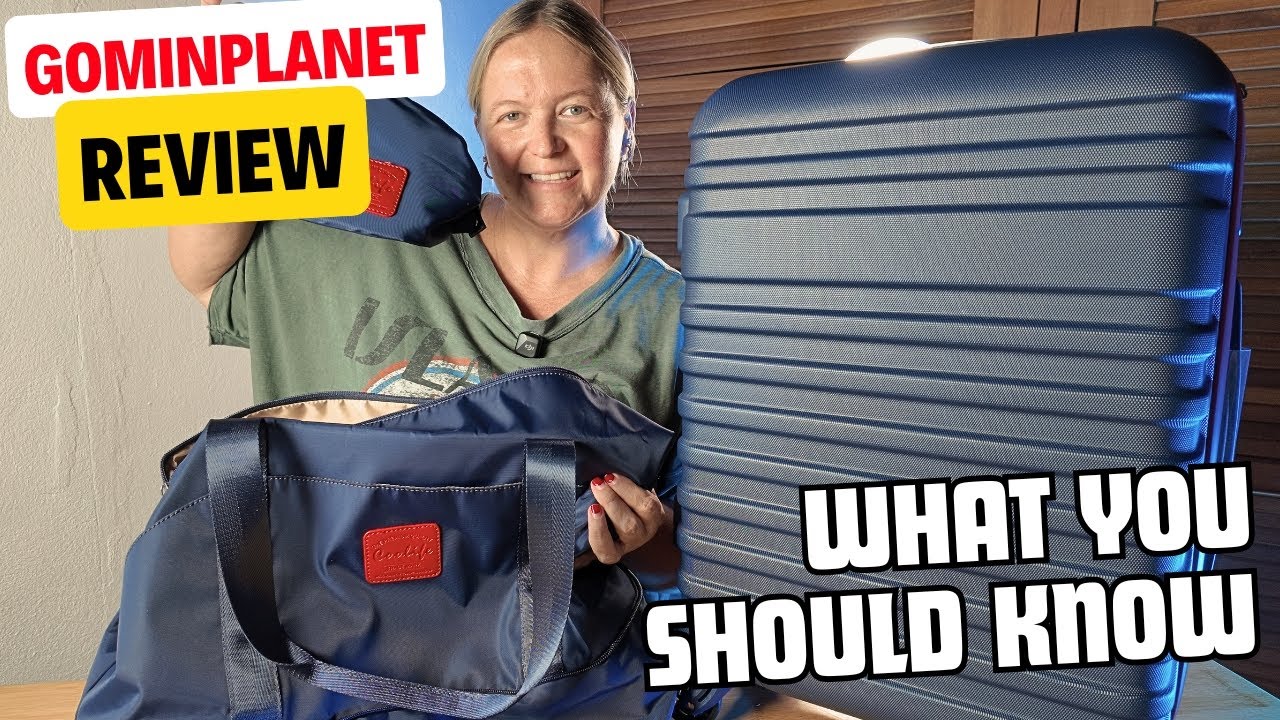
- For budget shoppers, Coolife is a legit starting point. The Coolife Luggage Set delivers high-end features including smooth spinner wheels, TSA locks, expandable storage, and organized interiors at an affordable price. Constructed with a German industrial-grade virgin polycarbonate hard shell, it is functional, lightweight, and durable.
“We went from paying Away prices to getting three polycarbonate hard shells from Amazon for what one Away carry-on costs. The Away is still our favorite bag, but the Coolife set comes on every family trip without any guilt.”
Myths vs. Facts About Hard Shell Luggage
Myth: Hard shell luggage is always heavier than soft shell.
Fact: When it comes to weight, there’s no telling which type of bag will come out on top, though softsided bags are generally a pound or two lighter. That gap has narrowed significantly with modern polycarbonate. Polycarbonate luggage is scratch resistant and lighter than plastic or aluminum cases, and can be even lighter than some soft luggage. Always check the actual listed weight before buying.
Myth: Soft shell is better for carry-on because it squishes into overhead bins.
Fact: This one is partly true for oddly shaped bins, but most modern airline overhead compartments are sized for standard spinner luggage. Checked bags benefit far more from hard-shell protection since they’re out of your sight and control. If you’re carry-on only on a big wide-body jet, hard shell is fine.
Myth: Hard shell luggage can’t expand.
Fact: Many modern hard shell bags are expandable. Away’s Polycarbonate Flex suitcases unzip to give travelers up to 2.25 inches of extra packing space. Coolife’s 28-inch piece also expands via a secondary zipper around the shell perimeter.
Myth: Hard shell means waterproof.
Fact: The important caveat is that the zippers remain the weak point on any hard shell bag: in sustained heavy rain, water will eventually enter at the zipper seams regardless of how good the shell is. Hard shell is water-resistant, not waterproof. It still beats wet tarmac sitting on a soft fabric bag, though.
Myth: Cheap Amazon hard shells fall apart fast.
Fact: Quality varies, but brands like Coolife use real polycarbonate or PC+ABS blends that handle normal travel well. Coolife has handled repeated flights and rough baggage handling better than expected for many reviewers. Read the specs carefully: shell material, zipper brand, and wheel construction tell you most of what you need to know.
Frequently Asked Questions
Is hard shell luggage really more durable than soft shell?
Yes, for checked bags specifically. Hard shell luggage tends to be more durable and can better protect fragile items. Soft shell options offer less protection for items inside, and its fabric can get torn or cut more easily. If your bag is going into cargo, hard shell is the better choice.
Does hard shell luggage weigh more and eat into my baggage allowance?
It can, but not as much as people think. When empty, a soft-shell suitcase is usually lighter than a hard-shell case of similar size, which affects how much you can pack and still fall within your airline’s weight restrictions. Depending on the quality and materials, the difference can be several pounds. That said, polycarbonate hard shells have closed that gap dramatically in recent years.
Is Away luggage worth the price compared to Amazon alternatives like Coolife?
Away is a genuinely excellent hard shell bag with quality finishing, smooth YKK zippers, and a long track record. Coolife’s prices range between $50 to $100 for single pieces and $150 to $300 for sets, making it a fraction of the Away price. For family travel or a second bag, Coolife is a very reasonable option.
Will my hard shell luggage get scratched and look awful?
It will get scratched. Every polycarbonate bag does. Away’s brand items are exceptionally sturdy and scratch-resistant with polycarbonate shell covers, with minimal blemishes from product testing. Scratches are surface-level and don’t affect the bag’s structural protection at all. Think of them as proof your bag did its job.
What material should I look for in a hard shell bag?
Hard-shell luggage is commonly made from polycarbonate, ABS plastic, or aluminum. Of these, polycarbonate is the most popular for its combination of strength, light weight, and impact resistance. If you’re buying a budget bag, a PC+ABS blend is a good compromise between cost and durability.
Is hard shell luggage good for international travel?
If you’re checking a bag, consider going with a hard shell that will better withstand being thrown around by baggage handlers, sitting on the tarmac in the rain, and being tossed on a conveyor belt. International trips, which often involve multiple connections and longer cargo exposure, are exactly where hard shell earns its keep.
The Bottom Line: Hard Shell is Worth It, at Every Price Point
Look, the scuffs are real. My Away carry-on has a few battle marks on it, and the Coolife set we grabbed for a family trip came home looking well-traveled after just two flights. But here’s the thing: everything inside was perfect. No broken bottles, no crushed souvenirs, no wet clothes from a rainy tarmac layover.
The benefits of choosing hard shell luggage instead of soft shell are clearest when you check bags. The rigid shell, the water resistance, the crush-proof frame, and the built-in locks make it the smarter structural choice for most travelers. And with brands like Coolife making solid polycarbonate hard shells available on Amazon for well under $150 for a full set, you no longer have to spend Away money to get Away-level protection.
Start with polycarbonate, check the wheel reviews, and stop worrying about scratches. They mean the bag is doing exactly what it’s supposed to do.
Sources
- Hard vs. Soft Luggage: How To Choose The Best Option For Your Travel Style
- Hard Shell vs Soft Shell Luggage: Which Is Best for Your Trip? | DELSEY PARIS
- The Best Suitcases: Hardshell vs Softside Luggage | Travelpro
- Hard vs Soft Luggage: Which is Better? | Nasher Miles
- Hard Shell vs Soft Shell Luggage: Which Is Better?, Traveler’s Choice
- Hard-Shell vs. Soft-Shell Luggage: A Complete Buyer’s Guide to
- What to Consider Before Buying Soft or Hard Shell Luggage
- Hard Shell vs Soft Shell Luggage: Which Should You Buy?, WNTR
Related reading
 Coolife 3-Piece Luggage Carry On Set Review Coolife 3-Piece Luggage Carry On Set Review |  Coolife 3-Piece Softside Luggage Set Review Coolife 3-Piece Softside Luggage Set Review |  AFBEST Cold Press Juicer Machine Review AFBEST Cold Press Juicer Machine Review |
About the reviewer
Seb and Michelle
We've tested over 6,500 products in the last 5 years - collaborating with over 4,000 brands and bringing our style of reviews to multiple platforms.