Cold Press vs. Centrifugal Juicers: Quality Matters
Wondering whether cold press vs. centrifugal juicers really changes your juice quality? Here's what the science says about oxidation, nutrients, and smart choices.

Reviewed by
Seb and Michelle
We've tested over 6,500 products in the last 5 years – collaborating with over 4,000 brands and bringing our style of reviews to multiple platforms. More about me →
Disclosure: This post contains affiliate links. If you buy through them, I may earn a small commission at no extra cost to you.
When it comes to cold press vs. centrifugal juicers and which juice quality actually matters, the short answer is: cold press does edge out centrifugal on nutrient retention, but the difference is smaller than the marketing suggests, and it narrows fast depending on what you juice and when you drink it. Both methods produce genuinely nutritious juice. The variable that matters most is oxidation speed, and that is controlled as much by your produce choices and storage habits as it is by the machine itself.
Key takeaways
- Cold press juicers produce modestly more nutrients than centrifugal models, but the gap shrinks if you drink the juice immediately.
- Centrifugal juicers generate only about 2-5°C of friction heat, which is far less damaging than their reputation suggests.
- Juice oxidation speed depends heavily on what you are juicing and how quickly you drink or refrigerate it.
- Cold press juicers yield significantly more juice from leafy greens, which can offset their higher price over time.
- Choosing between juicer types should come down to your habits, budget, and produce preferences, not marketing claims alone.
On this page
- Why This Debate Keeps Coming Up
- How Did We Get Here? A Quick History of Juicer Types
- Key Facts: What the Research on Juice Oxidation and Nutrients Actually Shows
- Practical Tips for Getting the Best Juice Quality from Either Machine
- Myths vs. Facts: What Cold Press vs. Centrifugal Juicers Gets Wrong
- Frequently Asked Questions
- The Takeaway: Which Juice Quality Actually Matters
Why This Debate Keeps Coming Up
Walk into any kitchen store or scroll through any health-focused Instagram account and you’ll see cold press juicers positioned as the obvious, science-backed choice. The story makes sense on the surface: slow pressing preserves nutrients, fast spinning destroys them. Buy the expensive machine, drink healthier juice. Done.
But the reality is a lot messier. The difference between the two juicer types is real, not invented, but it is also heavily exaggerated by brands with a financial stake in the cold press premium. I’ve spent time digging into the actual research, and what came back was more nuanced than either side wants to admit.
How Did We Get Here? A Quick History of Juicer Types
In the 1930s, juicing pioneer Dr. Norman Walker published a book called Raw Vegetable Juices, and as a result the Norwalk Hydraulic Press Juicer was developed. That hydraulic press approach is the true origin of cold press extraction: grind the produce into a pulp, then squeeze it under enormous pressure with no heat. The technique was not designed for home kitchens. It was slow, expensive, and labor-intensive.
1954 was the year the first masticating juicer was invented, first named the Champion Juicer. It was the best juicer at the time since it could juice almost every type of fruit and vegetable. That machine brought slow-speed extraction into the home for the first time and planted the seed for everything that followed.
In the 1960s and 1970s, juicing gained significant traction in health and fitness communities. Dave Otto’s juice bar in California became a hotspot, contributing to the smoothie craze and the growing popularity of fresh fruit juices. By the 1990s, juice bars were on every corner and the first twin-gear juice extractor, known as the Greenpower juicer, was introduced in the early 1990s.
In 1976, Goodnature’s founder Dale Wettlaufer invented what is now the industry standard in true cold press technology. The technology was first used by apple cider producers, but has since been adopted by high-quality cold pressed juice brands including Suja, Pressed Juicery, and Whole Foods Market. Today, the term “cold press” has been stretched so thin that it covers everything from a $90 masticating home juicer to a $27,000 commercial hydraulic press. One chef told HuffPost that the hydraulic cold-press juicer at his business costs $27,000. Most of us are not talking about that machine.
Key Facts: What the Research on Juice Oxidation and Nutrients Actually Shows
Here is where things get interesting. The cold press camp has real evidence on its side, but that evidence comes with context that often gets stripped out.
- Centrifugal juicers generate only 2-5°C of friction heat, which is not enough to destroy most nutrients. They do introduce more air (oxidation), which degrades some vitamins faster.
- The high-speed spinning in centrifugal juicers generates some heat and incorporates air, both of which can degrade heat-sensitive vitamins like vitamin C and certain enzymes. Studies comparing the two types generally show cold press juice retains 20-30% more nutrients, particularly from leafy greens.
- Research conducted at the University of California, Davis, found that cold-pressed green juices maintained up to 30% more chlorophyll and 25% more polyphenols after 48 hours of refrigeration compared to centrifugal counterparts. That “after 48 hours” qualifier is doing a lot of work in that sentence.
- In one test, cold-pressed juice contained about 15% higher nutrient content compared to centrifugal juice. A useful edge, but not the dramatic gap the premium pricing often implies.
- Scientific data from Food Science and Engineering confirms that cold-pressing yields significantly more juice than centrifugal extraction. For example, pineapple yield reaches 92% with cold-pressing compared to only 47% with centrifugal methods.
- Juice from a regular juicer separates quickly, develops off-flavors, and typically lasts about 24 hours, while cold-pressed juice stays vibrant and fresh for 3 to 5 days.
The yield gap on leafy greens is where the cold press juicer case is strongest. Cold press consistently produces more juice per kilogram of produce. The difference is dramatic for leafy greens (4.5x more) and meaningful for hard produce (20-30% more). If kale and spinach are your main ingredients, a cold press pays for itself faster than you might expect.
On the pricing side, centrifugal juicers run $60-$200 for a solid model, while cold press juicers run $150-$500+, with the best machines in the $250-$400 range. Home cold press juicers typically range from under $100 to around $600 depending on size, brand, and features. Premium models and commercial-grade juicers may exceed $600.
Practical Tips for Getting the Best Juice Quality from Either Machine
The good news: a lot of juice quality is in your hands regardless of which machine sits on your counter. Here is how to make the most of what you have.
- Drink it fast if you’re using a centrifugal juicer. If you only have 5 minutes, centrifugal is the realistic choice. An unused cold press is worse than a used centrifugal. The oxidation gap between the two machines is smallest in the first 30 minutes after juicing. Make it, drink it, move on.
- Batch juice only if you have a cold press. Cold press is the better choice if you can spare 15-20 minutes per session. The better yield reduces produce costs over time, and the 48-hour shelf life lets you batch-juice.
- Match your machine to your produce. Hard fruits like apples, carrots, and beets work well in a centrifugal juicer. If you juice daily or use leafy greens, invest in a cold press model. Better nutrient extraction and storage support consistent wellness habits.
- Store juice in sealed glass containers. Regardless of which juicer you use, air contact after juicing accelerates oxidation. Fill containers to the brim, seal them tight, and refrigerate immediately.
- Don’t stress about enzyme preservation. Some micronutrients are more heat-sensitive, such as vitamin C. Focus on protecting the nutrients most relevant to your produce. Vitamin C in orange juice degrades with air, not primarily with heat. Storage matters as much as the extraction method.
- Think about the full cost of ownership. If a cold press juicer gets you 20-30% more juice from the same bag of produce, the higher initial investment pays off through increased juice yield, reduced produce waste, longer shelf life, and superior nutrient retention for daily juicers.
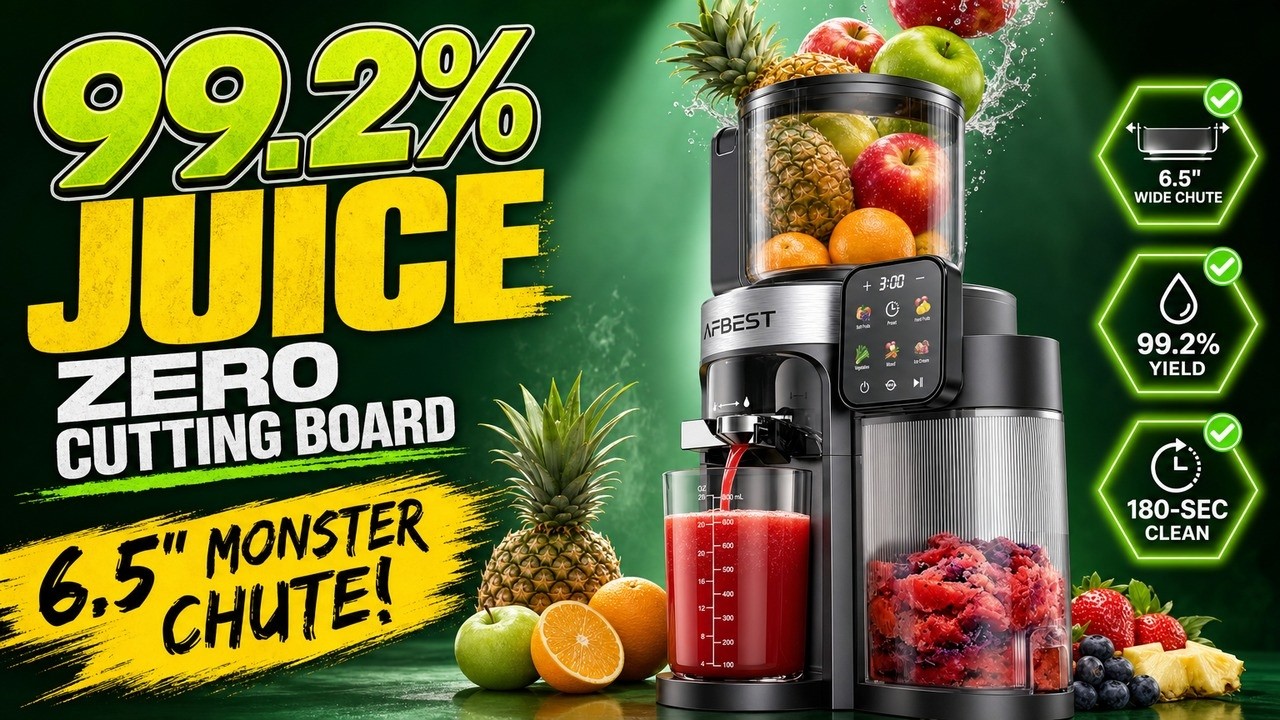
If you’re looking at entry-level options on the cold press side, the AFBEST Cold Press Juicer Machine is one worth looking at if your budget sits in the under-$150 range and you want to test the cold-press experience before committing to a flagship model.
Myths vs. Facts: What Cold Press vs. Centrifugal Juicers Gets Wrong
This is probably the most important part of the whole conversation. The juicer market is full of claims that sound scientific but fall apart under scrutiny.
-
Myth: Centrifugal juicers destroy your nutrients with heat.
This is the biggest myth in juicing. Centrifugal juicers generate only 2-5°C of friction heat, not enough to destroy most nutrients. The heat story is marketing, not biochemistry. -
Myth: Cold press juice is always more nutritious.
The truth is cold press has a modest edge due to less oxidation, but both methods produce nutritious juice. The gap depends on what you are juicing and when you drink it. -
Myth: “Cold pressed” on a label means the same thing every time.
Many masticating technology brands adopted the term “cold press” for their own technology, even though the technology and juice quality is very different. In marketing, these brands focus on the speed of extraction, which creates less heat, but ignore the fact that there is not a press involved in the extraction. Always check the actual mechanism. -
Myth: You can store centrifugal juice for a few days no problem.
Centrifugal juice begins losing significant nutritional value within minutes of extraction due to high oxidation. If stored, consume within 12 hours and expect diminished enzyme activity and flavor. -
Myth: Foam means the juice is bad.
Foam is caused by air being mixed into the juice. Centrifugal juicers spin at 10,000+ RPM, whipping air in during extraction. Foamy juice is not dangerous, but it does signal higher initial oxidation. -
Myth: Spending more always gets you better juice.
Occasional users may find a centrifugal model sufficient, provided they drink juice immediately. A $70 centrifugal machine used daily beats a $400 cold press sitting in a cabinet.
Frequently Asked Questions
Does a cold press juicer really preserve more nutrients than a centrifugal juicer?
Yes, but by a modest margin. The high-speed spinning in centrifugal juicers incorporates air, which degrades heat-sensitive vitamins like vitamin C and certain enzymes. Studies comparing the two types generally show cold press juice retains 20-30% more nutrients, particularly from leafy greens. If you drink centrifugal juice immediately, that gap narrows considerably.
How fast does juice oxidation happen after juicing?
Centrifugal juice begins losing significant nutritional value within minutes of extraction due to high oxidation. If stored, consume within 12 hours and expect diminished enzyme activity and flavor. Cold-pressed juice holds up much better in the fridge, staying vibrant and fresh for 3 to 5 days when stored in a sealed container.
Is a cold press juicer worth the higher price?
If you’re not sure whether juicing will stick as a habit, starting with an $80-$100 centrifugal juicer is the smart move, and you can upgrade once you know you’ll use it consistently. If you’re already committed and juicing is clearly part of your routine, the cold press pays for itself in reduced produce waste and better results. For regular leafy green juicers, the yield savings alone justify the cost over time.
Does it matter what produce I use when choosing between juicer types?
It matters a lot. Cold press juicers offer superior fiber separation and higher juice yields, up to 30% more from leafy greens like kale and wheatgrass. For hard produce like apples, carrots, and beets, the yield difference between the two juicer types is smaller, and a centrifugal machine handles them just fine. If greens are your focus, lean cold press. If you mostly juice citrus and root veg, centrifugal works well.
Can I batch-make juice with a centrifugal juicer?
Technically yes, but it is not a good idea. Cold-pressed juice is far better suited for storage. Centrifugal juice oxidizes quickly because of all the air introduced during extraction, so even a 12-hour-old centrifugal juice will taste noticeably flatter and have measurably fewer active nutrients. Batch juicing really is a cold press advantage.
What does “cold press” actually mean on a home juicer label?
Probably less than you think. The term “cold press juicer” originated in the 1950s and has since become somewhat misunderstood. Deciphering what constitutes a true cold press juicer requires understanding the technology and how marketing has blurred the lines between different juicing methods. Most home “cold press” machines are actually masticating juicers using a slow auger, not a hydraulic press. They are still superior to centrifugal for nutrient retention, but true cold press hydraulic technology is a different (and far more expensive) category entirely.
The Takeaway: Which Juice Quality Actually Matters
After going through the research, my take is this: the cold press vs. centrifugal debate has been so thoroughly captured by product marketing that it is hard to see the actual science underneath. Cold press does win on oxidation control, yield from leafy greens, and shelf life. Those are real advantages, not invented ones.
The machine matters less than your habits. The best juicer is the one you use consistently, fill with good produce, and drink from quickly enough that oxidation never gets a head start.
If you juice every day, work through a lot of greens, and want to prep a few days in advance, a cold press juicer earns its price. Choose centrifugal if you’re just starting out, you value speed and easy cleanup, your morning routine is already tight, or you mainly juice fruit and root vegetables. Neither machine makes bad juice. What makes bad juice is letting it sit on the counter oxidizing while you debate which machine to buy.
Sources
- Cold Press Juicer Vs Centrifugal Which Preserves More Nutrients
- Cold Press vs Centrifugal Juicer: Nutrient Retention, Speed & Cost, InstaCuppa Store
- Benefits of Cold-Pressed Juice: Is It Any Better?
- (PDF) Cold Pressed vs. Centrifugal Juice: Comparison in Terms of the Juice Yield, Physicochemical and Phytochemical Properties
- Cold-Pressed Juice Science: Superior Nutrient Retention
- Cold-Pressed VS Centrifugal Juice, Part 2: Nutrient Shelf Life
- Are Cold-Pressed Juices Healthy? Cold Press Juicer VS Regular Juicer, Canoly
- Why 80 RPM Juicers Preserve 94% More Enzymes Than High-Speed Models, Aeitto
Related reading
 AFBEST Cold Press Juicer Machine Review AFBEST Cold Press Juicer Machine Review |
About the reviewer
Seb and Michelle
We've tested over 6,500 products in the last 5 years - collaborating with over 4,000 brands and bringing our style of reviews to multiple platforms.