LifePro Horizon Half Balance Ball: Core & Balance Guide
A complete guide to the LifePro Horizon half balance ball trainer: who it's for, how it compares to a BOSU, inflation, weight limit, and the most-asked buyer questions answered.

Reviewed by
Seb and Michelle
We've tested over 6,500 products in the last 5 years – collaborating with over 4,000 brands and bringing our style of reviews to multiple platforms. More about me →
This post contains affiliate links. I may earn a commission at no extra cost to you.
Quick Take
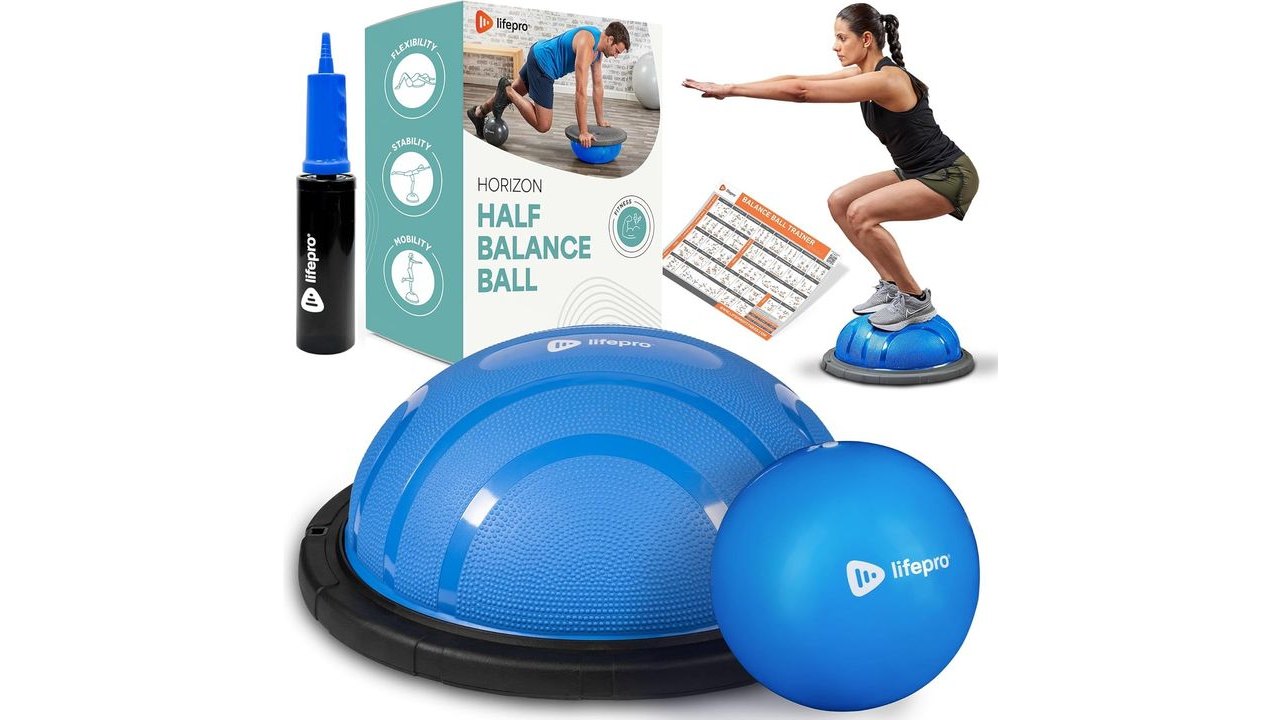
The LifePro Horizon is a 23.6″ half balance ball that holds up to 440 lbs and flips between dome-up stability work and a base-up challenge. It ships as a full kit, air pump included, so there’s no second trip to the store before your first session.
Good fit if you:
- Want PT-style balance work at home without clinic rates
- Are a senior or post-injury user rebuilding foot, ankle, and core stability
- Have limited floor space and hate a full ball rolling away
- Want two difficulty modes in one compact platform
Look elsewhere if you:
- Plan to train in socks on hardwood, the base has no grip and can slip
- Want resistance bands in the box, they’re sold separately
- Are an advanced athlete chasing maximum instability
Getting Out of Bed Shouldn’t Feel Like a Gamble
Balance is one of those things nobody thinks about until it’s gone. A foot surgery years back, an ankle that never fully came around, or just the slow drift of getting older, and suddenly standing on one leg to pull on a sock feels risky. That’s the exact gap the LifePro Horizon half balance ball trainer is built to fill. It’s a low-cost way to do the kind of progressive, proprioceptive work you’d normally only get in a physical therapy clinic, right on your living room floor.
A half balance ball trainer is the flat-bottomed cousin of the big stability ball. One side is a textured rubber dome, the other is a firm plastic base. Because it doesn’t roll, you can stand on it, squat on it, or plank over it without chasing it across the room. The Horizon adds a twist: flip it base-up and the whole thing gets dramatically harder, which is how one piece of gear keeps working as your balance improves.
What’s in the Box and What the Specs Mean
The Horizon ships as a complete kit rather than a bare dome you have to accessorize. Inside you get the trainer itself, an air pump, a 10″ Pilates ball, a portable inflation straw, a tape measure, two spare plugs, a plug-remover tool, and a user manual. The tape measure matters more than it sounds, it’s there so you inflate to the correct height instead of guessing, which is what keeps the wobble consistent rep to rep.
| Spec | Detail |
|---|---|
| Inflated dimensions | 23.6″ × 23.6″ × 8.7″ |
| Deflated height | 3.9″ |
| Net weight | 14.3 lbs |
| Max user weight | 440 lbs |
| Dome material | Textured non-slip PVC |
| Base material | PP and TPE |
| In the box | Trainer, air pump, 10″ Pilates ball, straw, tape measure, 2 plugs, plug tool, manual |
| Support | LifePro lifetime support |
Two numbers stand out. The 440 lb capacity means the platform isn’t a token toy, it’s rated to be stood on, jumped on for light plyometrics, and loaded during weighted squats. And the 23.6″ width gives a roomy footing, wide enough that a nervous beginner isn’t perched on a tiny surface trying not to fall off. The two recessed handles and 14.3 lb weight also mean it moves from closet to workout spot without a fight.
How Each Feature Translates to Real Use
The flat base solves the single most annoying thing about a full stability ball. It won’t roll away, it won’t wander when you step off, and it stores flatter and smaller. For a home gym where floor space is currency, that’s a practical win.
The textured non-slip dome gives your feet or hands something to bite into during single-leg holds, push-ups, and planks. Worth knowing: that grippy texture lives on the dome, not the underside. The base is smooth plastic. More on what that means for your floor in a moment.
The flip-mode design is the feature that earns its keep over months. Dome-up is the approachable setting for sit-ups, planks, push-ups, wall squats, and single-leg balance. Base-up, standing on the rounded shell, turns the same platform into a genuinely demanding instability challenge that lights up the small stabilizer muscles. One tool, two difficulty levels, and a built-in reason to keep progressing instead of plateauing on a flat balance board.
What It’s Realistically Good For
Balance and core work is the core job, and it does it across a wide range of users. Seniors worried about falling get a controlled way to force core and leg engagement. Someone recovering from foot or ankle surgery gets to replicate the same half-ball drills a physical therapist would prescribe, at home, on their own schedule. The recessed dome and firm base also make it a decent stretching and rehab aid, and a light plyometric platform for step-ups and jumps.
LifePro also positions it as a tool to help build core strength, ease lower back pain, and improve posture. Fair framing, with one caveat: it’s a supplemental piece of equipment, not a complete program. It supports those goals when you use it consistently. It doesn’t deliver them on its own.
Worth Knowing Before You Buy
The slip risk is the friction point. The dome grips, but the plastic base is smooth. Reviewers flag that training in socks on a hard floor can let the whole unit slide. The fix is simple, go barefoot or use it on carpet or a mat, but it’s the kind of thing you want to know before your first squat, not during.
The pump is manual. The kit includes everything you need to inflate, and buyers routinely report the whole process taking under two minutes including measuring for correct height, but there’s no electric pump in the box. If arm strength or grip is a concern, that’s a small thing to plan around.
Two more gaps. Resistance bands are not included, which is a notable omission since some competitors bundle them. And advanced athletes chasing maximum instability may find the approachable 23.6″ dome too tame, even in base-up mode, compared to a full-size BOSU or a wobble board. The Horizon is deliberately built to be usable by beginners and seniors first.
Get it now
LifePro Horizon Half Balance Ball Trainer with 440 lb Capacity | Stability Ball for Home Gym & Physical Therapy | Full-Body Training Equipment for Core Strengthening
Get the best price on Amazon →This post contains affiliate links. I may earn a commission at no extra cost to you.
Who Should Actually Buy This
The clearest fit is the home rehab and balance crowd. Post-surgery users rebuilding foot and ankle stability, older adults working to reduce fall risk, and anyone who wants clinic-style proprioceptive drills without the clinic. It’s also a smart pick for small-space home gyms that can’t accommodate a full stability ball rolling around, and for beginners who want a wide, forgiving surface to start on.
It’s a weaker match for serious athletes who already train on a full BOSU, and for anyone expecting a single gadget to melt fat or erase pain. Set the expectation as “a versatile balance and core tool with two difficulty modes,” and it delivers on that. Set it as “a complete fitness transformation,” and it won’t.
How the Horizon Stacks Up Against a BOSU and the Budget Options
The BOSU Ball Pro is the category benchmark, the one you see in commercial gyms, and it runs meaningfully more than the Horizon. BOSU wins on brand recognition and the volume of third-party workout programming built around it. The Horizon undercuts it on price and ships with a fuller accessory kit plus lifetime support, which most budget rivals don’t match.
| LifePro Horizon | BOSU Pro | Yes4All Half Ball | |
|---|---|---|---|
| Weight rating | 440 lbs | Gym-grade | Up to 880 lbs |
| Kit included | Full kit | Pump only | Minimal |
| Support | Lifetime | Limited | Short |
Comparison drawn from publicly listed product specs and the research brief.
The Yes4All half ball is cheaper and advertises a higher 880 lb rating, so pure value shoppers may lean that way. The ZELUS 25″ balance ball is the one to weigh if bundled bands matter to you, since it includes resistance bands and a textured surface out of the box. Against a plain full stability ball, the Horizon’s non-rolling base and smaller footprint are the deciding practical wins for tight spaces.
Tips to Get the Most Out of It
Use the included tape measure and inflate to the recommended height before your first session, under-inflating changes the feel and the difficulty. Start every new movement dome-up and near a wall or chair you can grab. Save base-up mode for after you’ve built confidence, because that’s where the real instability lives. Train barefoot or on carpet to kill the base-slip issue, and if you know you’ll want banded exercises, budget for a set of resistance bands separately since they aren’t in the box.
Pros
- Ships as a complete kit, air pump and all accessories included, ready to inflate and go
- 440 lb capacity on a sturdy PP/TPE base, rated for standing and loaded work
- Roomy 23.6″ wide dome that’s forgiving for beginners and seniors
- Two workouts in one via dome-up and base-up modes, so it grows with your progress
- Flat base doesn’t roll, stores compactly, and moves easily at 14.3 lbs with two handles
- Backed by LifePro lifetime support, rare at this price point
Cons
- Smooth base can slide when used in socks on hard floors, needs bare feet, carpet, or a mat
- Resistance bands not included, unlike some competitors
- Manual hand pump only, no electric inflation
- May feel too tame for advanced athletes wanting maximum instability
Frequently Asked Questions
Is the LifePro Horizon the same as a BOSU ball?
It’s the same category, a half balance ball with a dome on top and a flat base, but it’s a different brand. BOSU is the original commercial-gym benchmark and costs more, while the Horizon undercuts it on price and includes a fuller accessory kit plus lifetime support. Functionally they do the same job for home users.
How hard is it to inflate, and do I need my own pump?
No separate purchase needed, the air pump, inflation straw, and plugs all come in the box. Buyers commonly report the whole process taking under two minutes, including measuring for the right height with the included tape measure. The only caveat is that the pump is manual, so there’s some arm work involved.
What’s the actual weight limit, and can larger users use it?
The rated capacity is 440 lbs on the PP/TPE base. That’s a real structural rating, not a token number, so heavier users can stand, squat, and train on it within that limit. If you need an even higher ceiling, the Yes4All half ball advertises 880 lbs.
Is it safe and useful for seniors with balance problems?
Yes, it’s specifically positioned as balance equipment for seniors and older adults at risk of falling. The wide 23.6″ surface and non-rolling base make it more forgiving than a full stability ball. Start dome-up next to a wall or sturdy chair, and progress slowly.
Will it slide around on hardwood or carpet?
The non-slip texture is on the dome, not the base, so the smooth underside can slide on hard floors, especially if you’re wearing socks. Reviewers recommend training barefoot or placing it on carpet or a mat. On carpet it stays put well.
Can I use it for physical therapy and rehab, or just fitness?
Both. Many buyers choose it specifically to replicate the half-ball drills they used in physical therapy for foot, ankle, and core recovery. It also works as a stretching and rehabilitation aid. As always with rehab, follow whatever your therapist or doctor advises for your specific situation.
Do resistance bands come with it?
No, resistance bands are not included and must be bought separately. The kit does include the trainer, air pump, 10″ Pilates ball, inflation straw, tape measure, and spare plugs. If bundled bands are a priority, the ZELUS balance ball includes them.
How much storage space does it take, and can I store it upright?
Inflated it’s 23.6″ wide and 8.7″ tall, and it deflates down to about 3.9″ if you want it truly flat for storage. At 14.3 lbs with two recessed handles, it tucks into a closet or slides under furniture easily, and you can stand it on edge to save floor space.
Is it worth buying if I already own a regular stability or yoga ball?
It can be, because the half ball does things a full ball can’t. The flat base lets you safely stand on it for balance and plyometric work, it won’t roll away, and it takes less space. If your goal is standing balance and proprioception rather than seated core work, it’s a meaningful addition rather than a duplicate.
Is the included guide enough to actually get started?
The user manual gets you set up and covers the basics, and Walmart reviewers highlight exercise variety as a top theme. Third-party workout programming is thinner than what surrounds a BOSU, so plan to supplement with free online half-ball routines once you’re past the fundamentals.
If you want a compact, forgiving way to rebuild balance and core strength at home, and you’re clear that it’s a supplemental tool rather than a full program, the LifePro Horizon is an easy recommendation for beginners, seniors, and home rehab users. Check the current price and grab it here.
Get it now
LifePro Horizon Balance Ball Trainer
Get the best price on Amazon →This post contains affiliate links. I may earn a commission at no extra cost to you.
About the reviewer
Seb and Michelle
We've tested over 6,500 products in the last 5 years - collaborating with over 4,000 brands and bringing our style of reviews to multiple platforms.