Sigenergy SigenStor: Worth It?
30 solar panels, 47.5kWh of storage, 4 ACs running daily. Here's the full breakdown of our Sigenergy SigenStor system in Sint Maarten.
This post contains affiliate links. I may earn a commission at no extra cost to you.
Quick Verdict
The Sigenergy SigenStor isn’t just a solid battery system — it’s the right system for anyone serious about energy independence in a high-rate, high-sun environment. Paired with 30 JA Solar bifacial panels, a 47.5 kWh bank, and a 12 kW Energy Controller, the setup runs 4 ACs, a full production studio, and 3 bedrooms entirely off the grid. Batteries at 100% by 11AM. Every single day.
Buy if you:
- Live in a high-electricity-cost region (40¢+/kWh like the Caribbean)
- Need genuine off-grid capability, not just backup
- Want a scalable modular system that can grow with your energy needs
- Live somewhere with real storm risk and need hurricane prep built in
Skip if you:
- Are in a low-irradiance region with cheap grid power — the ROI math doesn’t hit the same
- Need a simple plug-and-play setup without proper sizing and professional installation
- Are comparing apples to apples with budget-tier battery brands on price alone
40 Cents Per Kilowatt-Hour Changes Everything
Here’s the number that makes the whole conversation different in the Caribbean: 40¢ per kWh. That’s what electricity costs in Sint Maarten. It’s more than twice the US average. So when you’re running 4 air conditioners full-time in a tropical climate, you’re not dealing with an inconvenient bill. You’re dealing with a serious monthly hit that compounds, year after year, with no end in sight.
That’s the real reason we went solar. Not because of a trend, not because a salesperson made a pitch. Because the math was undeniable. And once you start doing that math in a place that gets 1,750 kWh of solar irradiance per square meter per year — which, for reference, is double what Germany gets — the question isn’t whether to go solar. It’s which system is actually going to handle it.
The answer we landed on was Sigenergy. And in this video, we walk through everything — the full system, the specs, the real-world results, and what it took to build a setup that genuinely takes our home off the GEBE grid entirely. No grid draw. Zero. Daily.
The Exact System We Installed
This isn’t a theoretical build. Here’s what’s actually running on the roof and walls right now.
Thirty JA Solar JAM72D40-615MB panels. Each one is a 615W bifacial double-glass unit. Total peak generation: 18.45 kW. Bifacial means they capture reflected light from the rear face too, which matters on a reflective tropical surface. Double glass means durability — these aren’t flimsy residential panels with a plastic backing.
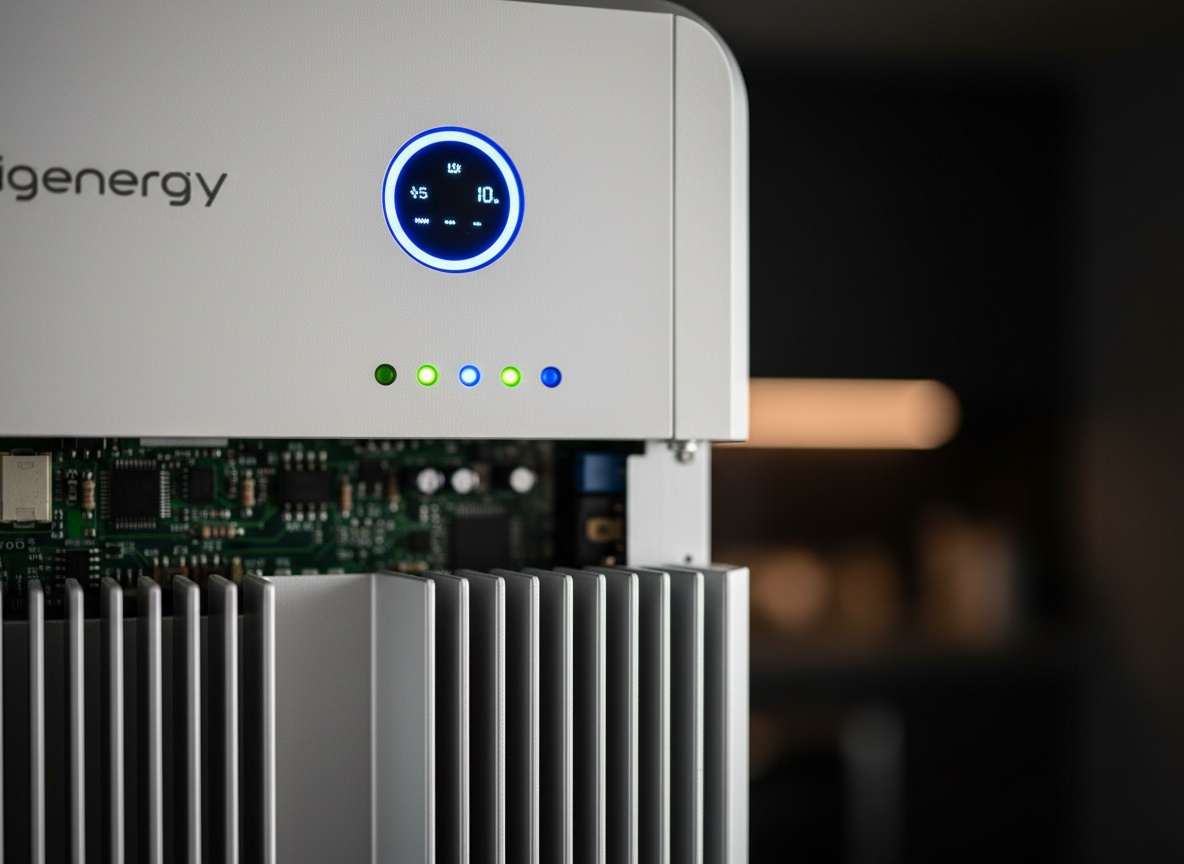
On the storage side: five Sigenergy SigenStor BAT 10.0 modules, each at 9 kWh, giving us 47.5 kWh of total battery capacity. The chemistry is lithium iron phosphate — LFP. That matters. LFP is thermally stable, doesn’t carry the same fire risk as NMC chemistry, and the cycle life is substantially longer. This is the same chemistry used in EV-grade cells, and it’s what the SigenStor is built around.
Tying it all together: a Sigenergy Energy Controller at 12 kW, three-phase, low voltage, paired with a Sigen Gateway TPLV C30-2. The whole thing was installed by Solar Tech Caribbean, who you can find at solartechcaribbean.com. Sizing and professional installation aren’t optional with a system at this scale.
The Sigenergy SigenStor is marketed as a 5-in-1 system — it integrates solar inverter, EV DC charger, battery power conversion system, battery pack, and energy management system in one unit. The inverter alone covers six power ratings from 3.8 kW to 11.5 kW, all configurable through software in the field. No hardware swap needed to adjust capacity. That’s a real differentiator.
Blackout switching: 5 milliseconds to backup mode. Returning to grid (when using grid): 0 milliseconds. IP66 weather rating with a built-in heating pad for extreme temps. And the system supports up to 4 MPP trackers for solar extraction efficiency. Those aren’t spec sheet bullets to ignore. They’re the difference between a battery that holds up in a Caribbean climate and one that doesn’t.
47.5 kWh Full by 11AM — Every Day
The headline stat from the video is the one that stops people: the entire 47.5 kWh battery bank is at 100% by 11AM every morning. Not occasionally. Every day.
Sint Maarten sits at roughly 18 degrees north latitude. The sun hits hard, it hits early, and it doesn’t quit until late afternoon. With 18.45 kW of peak panel capacity hitting that irradiance profile, the math works aggressively in your favor. You’re not waiting for batteries to charge while you run loads. The panels are outputting faster than the house is consuming, and the excess fills the bank. By late morning, it’s done.
The payback period in a market like this is 3 to 6 years. Compare that to the 10 to 18 years quoted for Germany. That delta is why solar in the Caribbean isn’t just an environmental choice. It’s a financial one with a very clear return.
The system is running 4 air conditioners around the clock. A full content production studio — lights, monitors, recording gear, the works. Three bedrooms. All of it off the GEBE grid. Zero draw from the utility.
That’s not marketing copy. That’s a meter reading.
60+ Days Without Power — the Part Nobody Talks About
Hurricane Irma. If you weren’t in Sint Maarten when it hit, the scale of it is hard to communicate. The video covers the real story — over 60 days without grid power in the aftermath. Not a few days. Not a week. Two months of scrambling, generators, fuel shortages, the whole situation.
That experience is what made this a non-negotiable decision rather than just a nice upgrade. The system isn’t only about saving money on a monthly bill. It’s about not being dependent on grid infrastructure that, in the Caribbean, can go down hard and stay down.
The storm preparation protocol built into this setup is genuinely clever. The panels are designed to be removed and stored before a major hurricane makes landfall. While they’re off the roof, the house runs entirely on the 47.5 kWh battery bank. With air conditioning off in storm mode, that’s approximately 59 hours of runtime. More than enough to get through a storm’s landfall and immediate aftermath while the grid fails around you.
That’s a 59-hour buffer between you and whatever the storm does to the utility lines. In a region where post-storm outages are measured in weeks, that buffer is everything. The video walks through exactly how this storm mode works and why the removable panel design was a deliberate choice, not an afterthought.
Get it now
Sigenergy SigenStor System
🛒 Learn More at Sigenergy.com →This post contains affiliate links. I may earn a commission at no extra cost to you.
Why Sigenergy and Not One of the Bigger Names
This is the question worth sitting with. Sigenergy isn’t a brand most people recognize the way they recognize Enphase or SolarEdge or Tesla’s Powerwall. So why this company?
One data point from the video stands out: $180M in revenue for 2024, representing 22.8x growth in a single year. That’s not a small brand slowly gaining traction. That’s a company that’s scaling so fast it’s forcing the energy storage industry to pay attention. And that growth comes from somewhere — it comes from the product performing.
The SigenStor’s architecture is built for scalability in a way that larger incumbents haven’t always prioritized. One to six battery modules stackable per unit. Mix old and new modules together without compatibility issues. The inverter configured via software, not hardware swaps. V2H and V2G capability baked in, meaning your electric vehicle can become a power source for your home if needed. A DC EV charging module available at up to 25 kW bidirectional.
For someone building a serious off-grid setup in a challenging environment, these aren’t extras. They’re requirements.
The video also covers the broader context here. Global solar capacity added in 2024 hit 597 GW, up 33% year on year. The energy storage space is moving fast, and the companies that didn’t exist five years ago are now building genuinely competitive hardware. Sigenergy is one of them.
The mySigen app handles monitoring and control. You can track real-time generation, storage state, consumption, and system health from your phone. For a system this size running a home and a business, that visibility matters.
The Setup That Makes Sense in the Caribbean
The video is specifically built for Caribbean homeowners — and the context is very different from a solar review made for someone in Arizona or Germany.
The combination of factors here is almost uniquely compelling. You have electricity rates above 40¢/kWh. You have solar irradiance at 1,750 kWh/m²/year. You have a climate that demands cooling loads for twelve months. And you have a grid infrastructure that has a documented history of extended failure during hurricane season.
That combination makes the ROI on a properly sized system much faster than almost anywhere else in the world. The 3 to 6 year payback figure cited in the video isn’t aspirational. It’s math that’s hard to argue with when grid electricity costs this much and the sun delivers this consistently.
The video also covers the history of solar energy and why the Caribbean specifically has been slower to adopt it than you’d expect given these conditions. Understanding that context helps explain why the market is shifting now, and why installers like Solar Tech Caribbean exist to handle deployments at this scale.
If you’re a homeowner on Sint Maarten, Guadeloupe, Martinique, Barbados, or anywhere else in the Caribbean with serious sun exposure and serious utility costs, the system walkthrough in this video is probably the most detailed Caribbean-specific solar content you’ll find from someone who’s actually living on the electricity it produces.
Sigenergy vs. Tesla Powerwall — Different League, Different Purpose
The comparison most people reach for is the Tesla Powerwall. It’s the brand name everyone knows. So let’s put it plainly.
A single Powerwall 3 delivers 13.5 kWh of storage. The SigenStor setup used here stacks five BAT 10.0 modules for 47.5 kWh. To match that with Powerwalls, you’d need three or four units. That changes the cost and the installation footprint considerably.
The Powerwall ecosystem is tightly integrated with Tesla’s solar hardware. If you’re not using Tesla solar panels, you’re working against the design intent. The SigenStor is agnostic. It paired cleanly with JA Solar panels here and isn’t locked into a single panel ecosystem.
The software configurability is also a meaningful gap. The SigenStor inverter runs across six power ratings through firmware, not hardware. That’s future-proofing. If your load requirements change, the installer doesn’t have to swap physical components.
The trade-off: Powerwall has brand recognition, a massive installed base, and a well-established support network. Sigenergy is newer, and on a small Caribbean island, local expertise with the hardware matters. That’s exactly why the installer partnership with Solar Tech Caribbean is worth calling out — they know this system, and they’re on the island.
For a home with modest backup needs and on-grid operation, the Powerwall is a reasonable choice. For an off-grid setup in the Caribbean running 4 ACs and a production studio, the SigenStor is the better fit on specs, scalability, and bang-for-capacity.
Before You Call an Installer
A few things the video makes clear that are worth flagging before you start getting quotes.
Sizing is everything. The 18.45 kW of panel capacity paired with 47.5 kWh of storage works for this specific home with these specific loads. Your loads are different. Your roof orientation is different. A system that’s undersized for your consumption won’t hit 100% by 11AM. It might not hit 100% at all. Get a proper load analysis done before you lock in a system size.
The Gateway is non-negotiable for off-grid operation. The Sigen Gateway TPLV C30-2 is what enables the off-grid mode to function. Skip it, and you don’t have an off-grid system. You have a grid-tied system with battery backup. The distinction matters enormously if your goal is zero grid draw.
Panel mounting and storm prep deserve as much thought as the electrical design. The removable panel system used here is specifically engineered for Caribbean hurricane prep. It’s not a standard install. If storm risk is a reason you’re going solar, make sure your installer understands how to build for it, not just how to wire it.
The video does a full component walkthrough that covers each piece of hardware and how it connects. If you’re in the planning phase, watching it before your first installer conversation will save you from a lot of back-and-forth on basics.
And for Caribbean homeowners specifically, Solar Tech Caribbean at solartechcaribbean.com handled this installation. They know the Sigenergy system, they know the local regulations, and they’ve done this in the Caribbean climate. That’s not a small thing when you’re committing to a system at this scale.
Frequently Asked Questions
What does the Sigenergy SigenStor system cost?
Pricing isn’t published per-unit on the Sigenergy site — it’s quote-based through installers. The full system shown here (30 panels, 5 battery modules, Energy Controller, Gateway, installation) is a significant investment, but in a 40¢/kWh market with 3–6 year payback math, the numbers work differently than in a low-rate region. Contact Sigenergy directly or through a local installer for a custom quote.
Does the SigenStor work completely off-grid without any grid connection?
Yes, as long as the system is correctly sized and the Sigen Gateway is installed. The Gateway is required for off-grid operation. The system covered in the video runs entirely off-grid — no grid draw, zero — every single day. It’s not a backup mode that kicks in occasionally. It’s the default operating state.
How long do the batteries last during a hurricane with the panels removed?
Roughly 59 hours in storm mode with the air conditioners off. That’s 47.5 kWh powering essential loads without any solar input. It covers the storm itself and a meaningful chunk of the recovery window before panels go back up.
Can I expand the battery capacity later?
Yes. The SigenStor is modular — you can stack between 1 and 6 battery modules per unit and mix old and new modules together. So if you start with 3 modules and want to add 2 more later, the system supports that without replacing existing hardware.
Is Sigenergy a reliable brand for a long-term investment like this?
The company reported $180M in revenue for 2024, a 22.8x increase in one year. That’s not a startup scraping by. The LFP battery chemistry they use has a long cycle life and a strong safety record. The IP66 rating and built-in heating pad show they’ve designed for real-world weather. But any brand comparison should factor in local installer support — that’s as important as the hardware itself.
Related reviews
- Turn Off Your Pool Pump When Running Beatbot (Here’s Why It Matters)
- LEFEET C1 Underwater Scooter Review: We Tested It in the Caribbean
Do I need JA Solar panels specifically, or will the SigenStor work with other brands?
The SigenStor works with panels from other manufacturers — it’s not locked to JA Solar. JA Solar was the panel choice for this specific build based on the bifacial double-glass spec and performance profile. The Energy Controller supports up to 4 MPP trackers, giving flexibility in how panels are configured across different orientations or roof sections.
Get it now
Sigenergy SigenStor System
🛒 Learn More at Sigenergy.com →This post contains affiliate links. I may earn a commission at no extra cost to you.