Level Your Lawn Without Pros — $32 Lawn Leveling Rake Does It
A $31.79 stainless steel lawn leveling rake that promises a flat, pro-looking yard without hiring anyone. We break down whether it delivers.

Reviewed by
Seb and Michelle
We've tested over 6,500 products in the last 5 years – collaborating with over 4,000 brands and bringing our style of reviews to multiple platforms. More about me →
This post contains affiliate links. I may earn a commission at no extra cost to you.
Quick Verdict
At $31.79, this lawn leveling rake is one of the more practical yard tools you can pick up on Amazon. The 17-inch stainless steel plate covers real ground fast, the adjustable handle saves your back, and the build quality doesn’t feel like it’ll snap after one season. If your yard has low spots, patchy areas, or uneven topdressing and you don’t want to pay a landscaper to fix it, this tool gets the job done.
Buy if you:
- Have uneven lawn areas or low spots you want to fix yourself
- Want to spread topdressing, soil, or sand without renting equipment
- Need a durable tool that can handle full seasons of yard work
- Want to avoid the cost of hiring a landscaping crew
Skip if you:
- Have a small, flat lawn that doesn’t need leveling at all
- Prefer lightweight plastic garden tools over heavier stainless steel
- Need a specialized aerator or dethatching tool — this doesn’t do that
Hiring a Landscaper Costs Hundreds. This Rake Costs $32.
Uneven lawns are one of those yard problems that feel expensive to fix. You either ignore the bumps and puddles, or you call a professional and hand over a few hundred dollars for what amounts to someone pushing soil around and smoothing it flat. Neither option feels great. That’s what makes a tool like this worth paying attention to. The lawn leveling rake reviewed in the video comes in at $31.79 on Amazon, features a 17-inch-wide stainless steel plate, and is designed to do exactly what landscapers charge a premium for — spread, smooth, and level topdressing or soil across uneven yard surfaces.
The DIY lawn care niche has exploded for a reason. More homeowners are figuring out that the gap between “looks like a pro did it” and “I did it myself” is mostly just the right tool. And for lawn leveling specifically, that tool is a wide, flat, sturdy drag rake with enough surface area to actually move material efficiently. This one checks those boxes on paper. Let’s talk about whether it holds up beyond the spec sheet.
17 Inches Wide. That’s the Number That Matters.
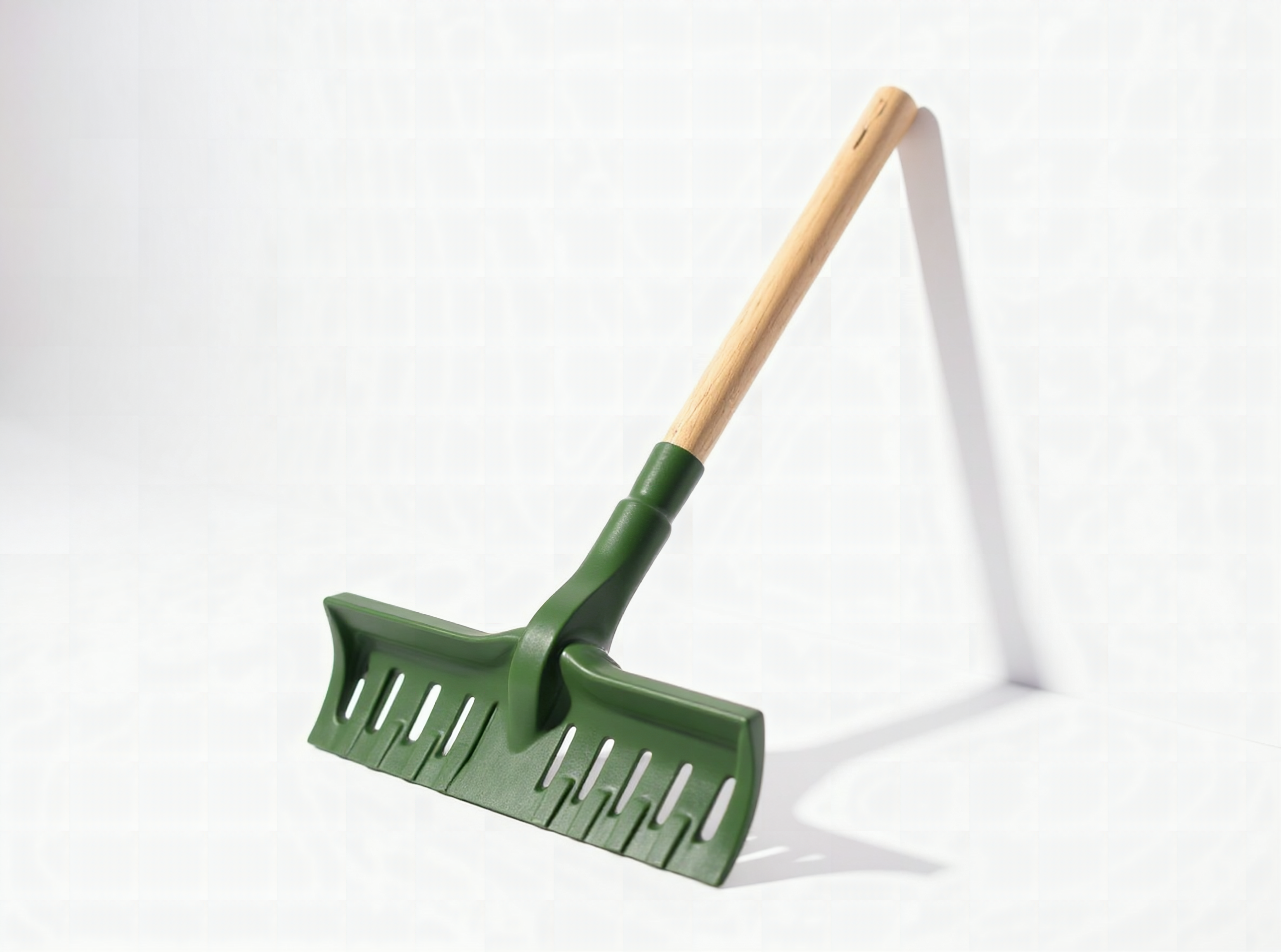
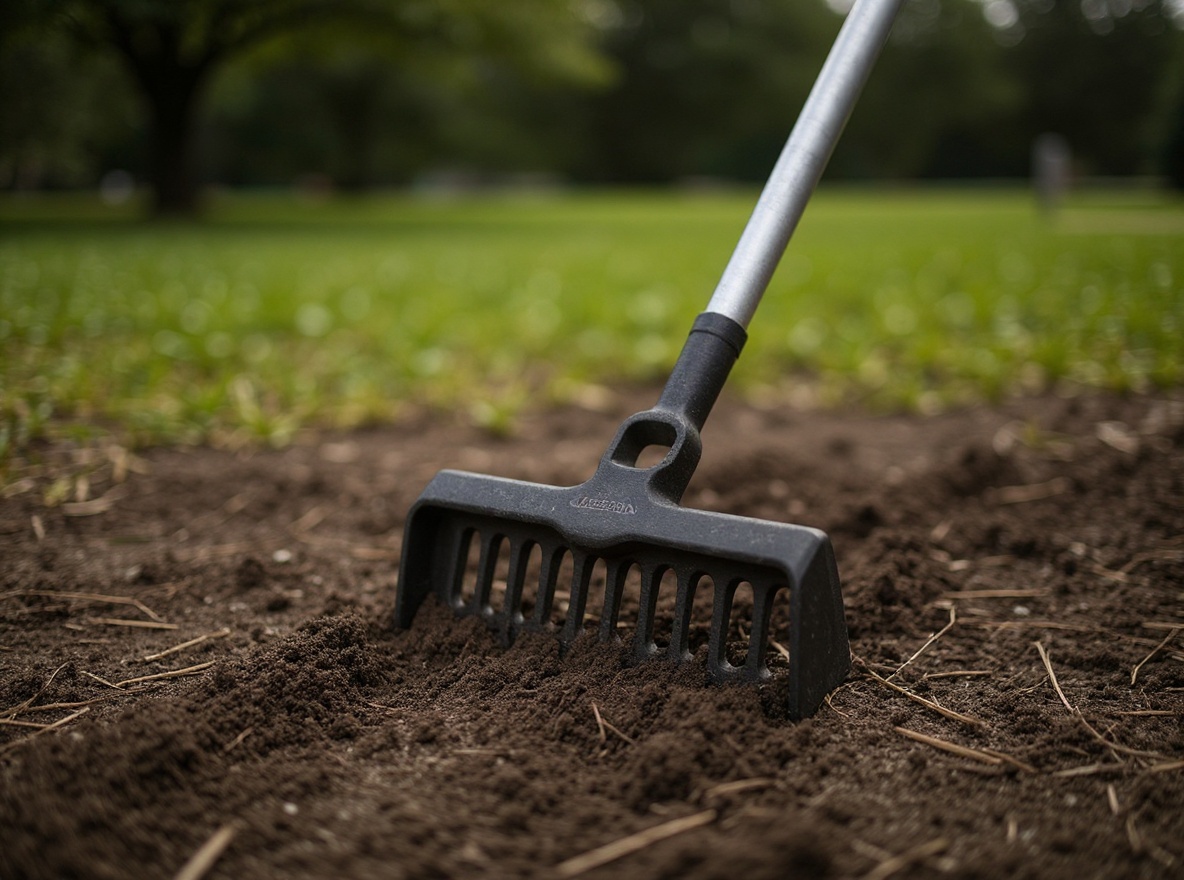
Most standard garden rakes are 12 to 14 inches across. That’s fine for leaf raking or light garden work. But lawn leveling is a different job. You’re moving volumes of topdressing material — sand, compost, topsoil — across square footage of yard, and the more surface area you have, the faster and more evenly that goes. The 17-inch by 10-inch stainless steel plate on this rake is the main selling point, and it’s a meaningful size advantage over what most homeowners already have in the garage.
The depth of the plate — 10 inches — matters too. That’s what allows the rake to contain and push material rather than just skim the surface. Think of it less like a traditional rake and more like a squeegee for your yard. Material goes in front of the plate, you drag it across the low spot, and it fills in as you go. That’s the fundamental mechanic of topdressing, and the wider and deeper the plate, the fewer passes you need to get a level result.
The handle adjusts from 28 inches to 60 inches using a screw-lock connection. That range is wide enough to accommodate different heights and different tasks. At 28 inches you’re working more detail-oriented, close-range areas. At 60 inches you’re covering open ground with full walking posture, which is where this tool really reduces fatigue over long sessions. The whole thing weighs 8.5 lbs — heavy enough to feel substantial, light enough that you’re not fighting the tool itself while you work.
Stainless Steel Versus Everything Your Yard Will Throw at It
Let’s talk about the material, because this is where budget lawn tools tend to fall apart — sometimes literally. The ground plate and handle on this rake are both stainless steel, with double spot-welded reinforced welds at the connection points. That construction detail matters more than it might seem at first. The joint between handle and plate is the highest-stress point on any drag rake. If that weld is weak, the tool flexes under load, the handle wobbles, and within a season or two you’ve got a broken tool sitting in the garage.
Double spot-welding is a straightforward fix to that problem. It distributes the stress across more contact points, which keeps the connection rigid even when you’re dragging the rake through wet, heavy material or pushing against compacted soil. The manufacturer markets this as “wobble-free” and “secure fit after assembly,” and based on the construction spec that claim is at least structurally supported — this isn’t a tool that’s going to flex apart on you mid-job if you’re using it as designed.
The rust resistance claim is also plausible for stainless steel in normal yard use conditions. Stainless isn’t invincible — leave it submerged in wet soil for extended periods and surface oxidation can still occur — but for seasonal outdoor use with basic maintenance (rinse it off, let it dry, store it out of standing water), this material choice holds up better than powder-coated steel or aluminum over time. For a $31.79 tool, the material spec is genuinely solid.
The edges are described as smooth and rounded, marketed as “anti-flipping” and scratch-free. In practical terms that means when you drag the rake across grass, the leading edge doesn’t catch and tear turf. That’s not a minor feature. Rakes with sharp or rough leading edges can scalp or damage grass blades, especially on thinner lawns. Rounded edges let you work right up to the edge of established turf without creating more problems than you’re solving.
The Back Pain Problem Nobody Talks About With Yard Work
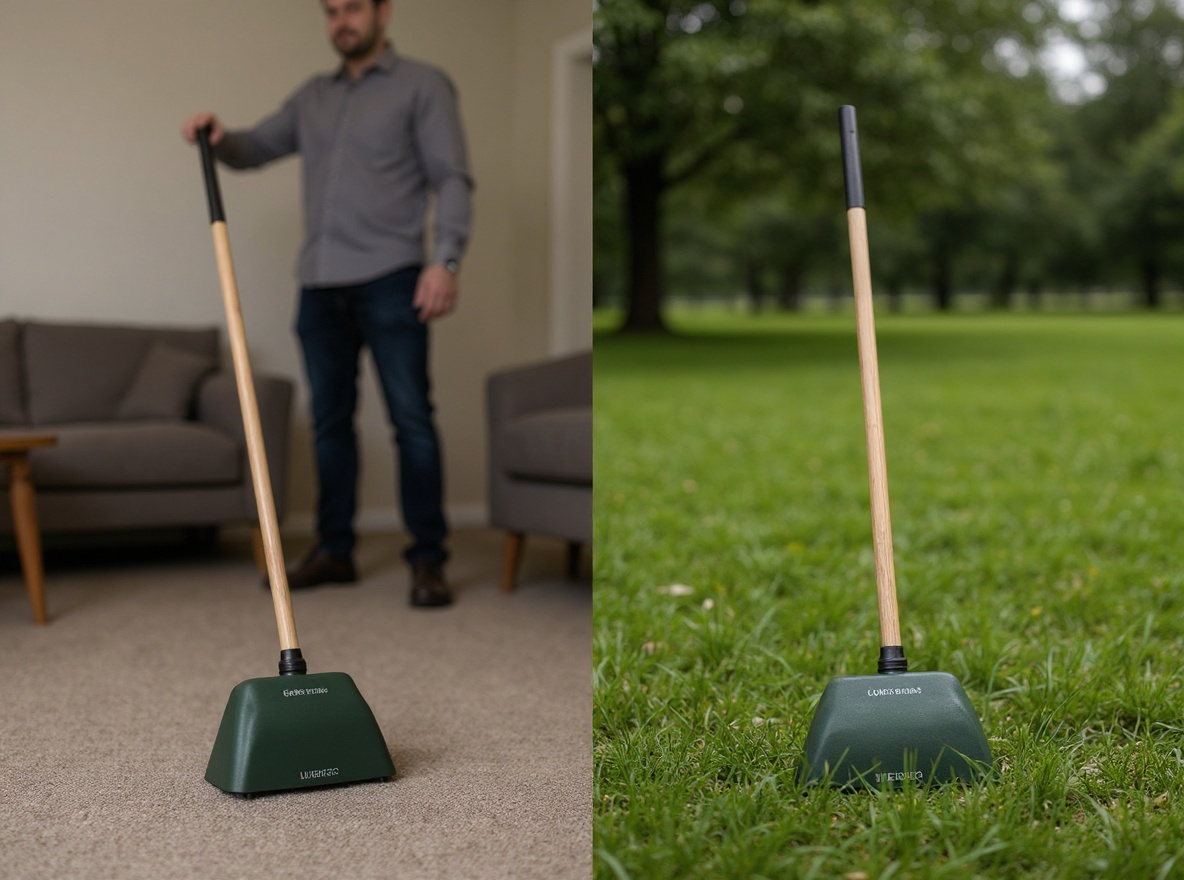
Here’s what most lawn tool reviews skip over entirely: the ergonomics. Specifically, the fact that a huge percentage of people who do DIY yard work for a few hours end up with a sore back, not because the work is inherently brutal, but because they’re using tools that force them into bent-over postures for extended periods. Fixed-length handles are a big part of that problem. If the handle is too short for your height, you compensate by hunching. Do that for an hour of leveling and you’ll feel it the next morning.
The adjustable handle on this rake — specifically the 28-to-60-inch range — is a direct answer to that problem. Taller users can extend it fully and work upright. Shorter users can bring it down to a comfortable working angle without sacrificing control. The screw-lock mechanism locks the handle at whatever length you’ve chosen, so there’s no gradual creep or sudden collapse mid-stroke. It’s a functional design decision, and for a tool at this price point, it’s the kind of thing that makes the difference between something you use once and something you reach for every season.
The 8.5 lb weight is worth contextualizing here. That’s heavier than most garden rakes. It’s not heavy enough to be a problem, but it does mean the tool has presence when you’re working with it. The weight is actually a feature for leveling work, because it helps the plate maintain contact with the soil surface without you having to press down constantly. You guide, the weight does some of the work. That said, if you’re working for long sessions on a large property, you’ll notice the weight more toward the end of the job than at the start.
Assembly is described as quick, with included tools. The screw-lock handle connection means no additional hardware hunting, and the tool ships ready to put together without needing anything from your toolbox. That’s a small thing, but it matters when you’re trying to get a yard project started without spending twenty minutes looking for the right size Allen wrench.
Learn more
Lawn Leveling Rake
Get the best price today →This post contains affiliate links. I may earn a commission at no extra cost to you.

Topdressing vs. Full Regrading — Know the Difference First
This is the context that most product listings gloss over, and it’s the thing that determines whether this rake will actually solve your lawn problem. There are two categories of uneven lawn issues. The first is topdressing — filling in low spots, evening out minor bumps, spreading a thin layer of compost or sand to improve the overall surface grade. That’s exactly what this rake is built for. The wide plate spreads material evenly, the depth contains it, and you work it into the grass canopy so it settles in over time.
The second category is full regrading — when your yard has serious drainage problems, significant grade changes, or structural issues with the soil beneath. That’s not a rake problem. That’s an excavation and drainage project, and no lawn tool at any price is going to fix it on its own. If you’re standing in your yard after a rainstorm and there’s standing water six inches deep in the low corner, you need more than a rake. But if the surface is generally okay with some rough spots, low patches from lawn repair, or uneven topdressing from a previous season, this tool is built for exactly that job.
The product page mentions use cases beyond residential lawns — golf courses, sports fields, landscaping projects. Those applications track. The same mechanics that work for a residential yard apply to any surface where you need to spread and level granular material at scale. A 17-inch plate is professional width. You don’t typically see that on consumer tools at this price. That’s part of what makes this particular rake stand out in an otherwise crowded category of lawn tools that mostly underdeliver on surface coverage.
One thing to keep in mind before you start: the rake works best when the material you’re spreading has a loose, granular consistency. Fine topdressing sand, composted soil, or a sand-soil blend all move well under the plate. Wet clay or heavily compacted existing soil won’t respond the same way. The rake levels what you put down — it doesn’t dig up or break apart what’s already there. Set expectations accordingly and you’ll get exactly what the tool promises.
Small Yards, Large Projects, Seasonal Maintenance
The obvious fit for this rake is a homeowner with a residential lot who wants a flatter, more even lawn surface without hiring out. Maybe there are low spots from settling. Maybe the lawn was recently reseeded and the surface isn’t quite smooth. Maybe the previous owner let the lawn go and there are visible bumps and dips throughout. Any of those situations is exactly what this tool was designed to address.
But the adjustable handle and the wide plate also make this useful for garden beds where you’re leveling soil before planting. The 60-inch max length lets you work from a standing position, which is a real advantage for people who struggle with extended kneeling or bending. That versatility across lawn and garden applications means you’re not buying a single-season specialty tool — you’re buying something that stays useful across multiple projects throughout the year.
Seasonal spring prep is one of the strongest use cases. After winter, lawns often have uneven spots from freeze-thaw cycles, animal activity, or just natural settling. A light topdressing of fine compost or sand spread and leveled with this rake before the growing season is one of the most effective things you can do for overall lawn health. And at $31.79, you recoup the cost the first time you skip the landscaping crew visit.
The tool also makes sense for anyone doing their own overseeding program. When you overseed, you want seed-to-soil contact and a reasonably smooth surface so seed distribution is even and water flows correctly. The plate helps smooth the surface after topdressing, which directly improves germination outcomes. It’s not a broadcast spreader and it’s not a seed roller — but as part of a DIY overseeding workflow, it fills a real gap.
If you’re maintaining a sports field, a large commercial property, or a multi-use recreational area, the tool is marketed for those applications too. The stainless construction and reinforced welds are more relevant there — those environments are harder on tools. Whether a sub-$40 rake holds up to true commercial-frequency use over multiple seasons is a longer-term question, but for semi-regular professional use it’s a reasonable option at this price point.
The Drag Rake Category Is Crowded — Here’s the Trade-Off
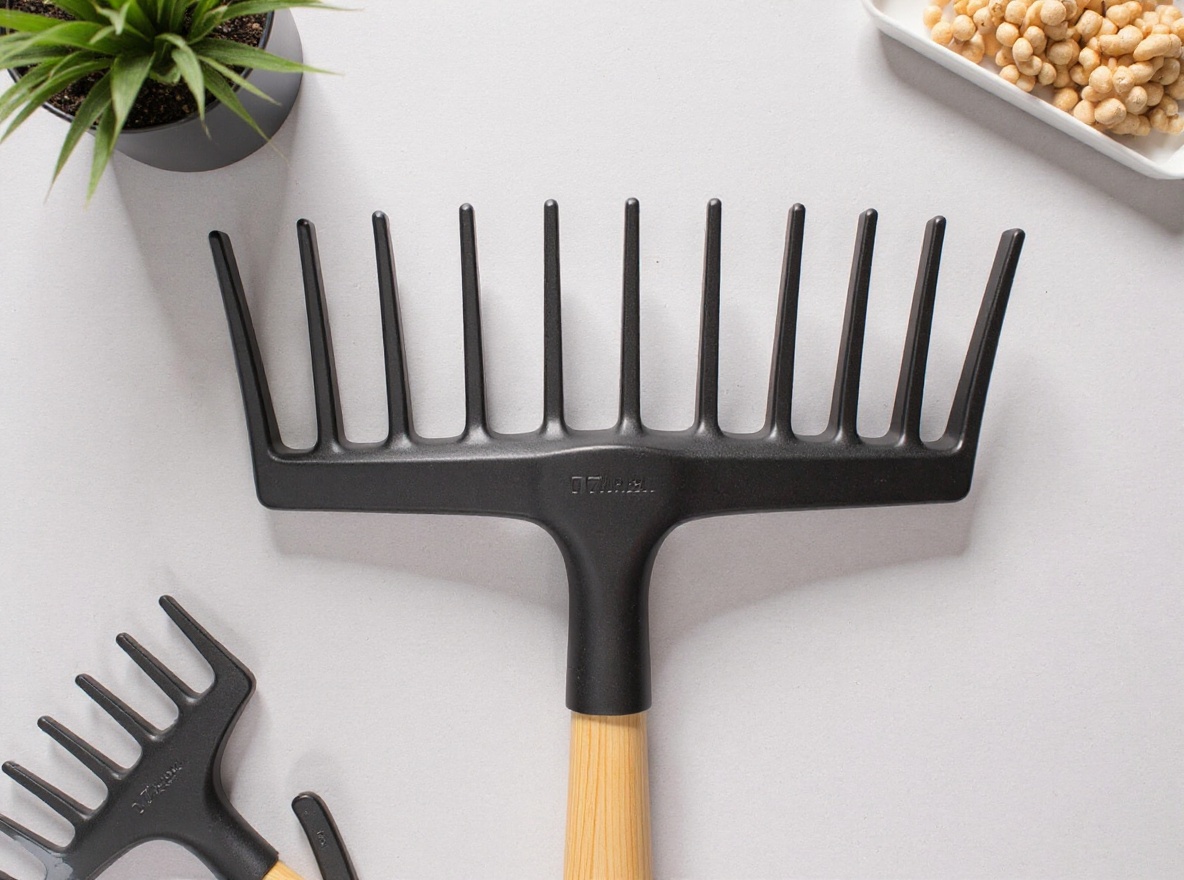
At $31.79, this rake is positioned in the mid-budget range for lawn leveling tools. Below it you’ll find rake-style levelers made from powder-coated steel or aluminum with fixed handles, usually in the $20 to $25 range. Those tools work, but the fixed handle is a genuine ergonomic limitation, and the material quality tends to show its age faster. The edge quality is also typically rougher, which is where you start seeing turf damage on thinner lawns.
Above this rake, you move into professional-grade leveling tools in the $60 to $120 range — wider plates, heavier-duty construction, sometimes with specialized handle designs. Those make sense for commercial applications or very large properties where you’re doing this work on a weekly basis. For a homeowner doing seasonal leveling on a standard residential lot, the extra spend doesn’t translate to proportionally better results.
The key differentiators for this rake versus the cheaper options in its category are the adjustable handle, the stainless steel construction, and the double spot-welded connection. All three of those are functional upgrades over what you’d find at the $20 price point. The question is whether those upgrades justify the $10 to $12 price difference. For most homeowners who plan to use the tool more than once, yes. Fixed handles and weak weld joints are exactly where budget lawn tools fail, and paying a small premium to avoid those failure points is a sensible trade-off.
One area where the comparison isn’t as favorable: weight. At 8.5 lbs, this rake is heavier than some aluminum alternatives in the same price range. Aluminum leveling rakes in the $35 to $45 range will come in closer to 5 or 6 lbs, which matters over long work sessions. Stainless is more durable, but if your main concern is extended fatigue management rather than long-term material durability, the aluminum option is worth considering.
Before You Pull the Trigger, Read This
A few things to set up right from the start. First, the handle connection. The screw-lock system works best when you seat it firmly before you start working. A loose connection is the most common source of the “wobble” that users report with any extendable handle tool. Give it a firm tighten at your preferred length, test it with a couple of test strokes, and re-tighten if needed. It shouldn’t move after that.
Second, material prep matters more than the tool itself in some ways. Dry, loose topdressing material levels faster and more evenly than wet or clumped material. If you’re spreading bagged topdressing, let it sit out in the sun for an hour before you start if it’s been sitting in a damp garage or shed. The rake will distribute it more consistently and you’ll need fewer passes to get an even surface.
Third, don’t skip the cleanup step. Stainless steel holds up well, but soil and moisture sitting on the plate between uses will eventually cause surface staining even on stainless. A quick rinse after each use and storage in a dry spot is all it takes. That’s not extra maintenance — it’s the same basic care you’d give any metal garden tool. Keep it clean and this thing will outlast several seasons without issue.
And finally: know what you’re fixing before you start. If you have severe drainage issues or major grade problems, this rake is a finishing tool, not a foundation fix. Start with whatever grading or drainage work needs to happen first, then use the rake to smooth and level the final surface. Used in the right sequence, it delivers a clean, even result that looks like it cost you far more than $31.79.
Check current pricing and availability for the lawn leveling rake on Amazon before you decide — pricing on tools like this can shift, and it’s worth confirming stock if you’re planning around a specific project date.
Frequently Asked Questions
Can this rake handle spreading sand for lawn leveling?
Yes, that’s one of its primary use cases. Fine leveling sand or a sand-soil blend moves well under the 17-inch plate. It’s one of the most common topdressing materials for lawn leveling projects, and the rake’s plate depth helps contain and push it evenly across low spots. Just make sure the sand is dry and loose before you start spreading — wet sand clumps and doesn’t distribute as cleanly.
Will the handle actually fit someone who’s taller than average?
At 60 inches fully extended, the working height is comfortable for most adults up to around 6’2″ or 6’3″ without needing to hunch. If you’re significantly taller than that, you might still feel a slight forward lean depending on your arm length. But for the average to above-average height range, the 60-inch max is a solid working height. That’s the main ergonomic reason to choose this over a fixed-handle rake.
How much topdressing material do I need for a standard residential lawn?
A light leveling application — typically around a quarter-inch layer — over 1,000 square feet requires roughly 0.8 cubic yards of topdressing material. For a typical residential front or back lawn you’re usually looking at two to four cubic yards total depending on the size and severity of the unevenness. This rake doesn’t affect how much material you need, but it does affect how efficiently you spread it — the wider the plate, the fewer passes required to cover the same area.
Does this work for spreading grass seed or just topdressing?
It’s better suited as a post-seeding surface smoother than a seed spreader. You’d broadcast your seed first with a spreader, then lightly topdress and use the rake to smooth the surface and improve seed-to-soil contact. Don’t use the rake to directly spread seed — the plate will pile and bunch it unevenly. Think of the rake as the finishing step after seeding, not a replacement for the broadcast spreader.
Is it worth buying at $31.79 or are there cheaper options that do the same job?
Cheaper fixed-handle options exist in the $18 to $25 range and they’ll work for basic topdressing. But the adjustable handle and double spot-welded stainless steel construction are real upgrades that you won’t find at that price. If you’re doing this once and never again, maybe the cheaper option is fine. If you’re treating lawn leveling as part of your regular seasonal maintenance routine, the $31.79 version makes more sense long-term.
Related reviews
- Bright Outdoor Lighting Without Wiring: 20-Inch Solar Landscape Lights Review
- 24-Inch Cordless Hedge Trimmer Review: Brushless Power Without the Cord Chaos
- Kinglucky Pillow Speaker Review: Better Sleep Without Anything in Your Ears
Can this rake damage existing grass if I use it on an established lawn?
The smooth, rounded edges are specifically designed to minimize turf damage. Used correctly — dragging across the surface to spread and smooth topdressing material — it shouldn’t scalp or tear established grass. Where damage can occur is if you’re pressing down hard on dry, thin turf or if the plate edge isn’t fully smooth. Check the edges when you assemble it and make sure there aren’t any rough spots from manufacturing before you use it on established lawn areas.
Learn more
Lawn Leveling Rake
Get the best price today →This post contains affiliate links. I may earn a commission at no extra cost to you.
About the reviewer
Seb and Michelle
We've tested over 6,500 products in the last 5 years - collaborating with over 4,000 brands and bringing our style of reviews to multiple platforms.