SHONELIGHTING Solar Step Lights: 33 LEDs, Zero Wiring
We tested the SHONELIGHTING solar step lights on our outdoor stairs — 33 LEDs, aluminum build, no wiring. Here's the real verdict.

Reviewed by
Seb and Michelle
We've tested over 6,500 products in the last 5 years – collaborating with over 4,000 brands and bringing our style of reviews to multiple platforms. More about me →
This post contains affiliate links. I may earn a commission at no extra cost to you.
Quick Verdict
The SHONELIGHTING solar step lights do exactly what they promise: light up dark stairs at night without a single wire, a single electrician, and zero ongoing electricity cost. The 33-LED output per light is noticeably stronger than typical budget solar options, and the aluminum build feels like it’ll survive more than one rainy season. If your outdoor stairs are a hazard after dark and you’ve been putting off fixing it because of installation headaches, this is the straightforward fix you’ve been waiting for.
Buy if you:
- Have outdoor stairs, steps, or deck edges that go completely dark at night
- Want a no-wiring, no-electrician install that takes minutes
- Live somewhere with decent daily sun exposure to keep them charged
- Want lighting that runs on solar so there’s no monthly cost creeping onto your bill
Skip if you:
- Your stair location gets very little direct sunlight during the day
- You’re expecting these to function as full flood lighting — they’re step-level safety lights
- You need bright output on back-to-back cloudy days without any sun recharge
Our Outdoor Stairs Were a Nighttime Problem We Kept Ignoring
Living in St. Martin means we spend a serious amount of time outdoors. Evenings on the terrace, late-night swims, guests coming and going after dark. And for a long time, the stairs leading to our outdoor area were basically a liability the moment the sun went down. You get used to it — you start muscle-memorizing the step count, everyone learns to grip the railing — but it’s not a solution. It’s just adapted negligence.
We’d looked at wired low-voltage landscape lighting before. The quotes we got from electricians weren’t outrageous, but between the installation timeline, the trenching, and the fact that we rent part of our property, it felt like overkill for what was really just a safety issue on a few steps. Solar step lights kept coming up as a solution, but most of what we’d seen online was the cheap plastic stuff that glows about as bright as a birthday candle.
Then we came across the SHONELIGHTING solar step lights. The 33-LED count per unit stood out immediately — that’s not typical for this price range. So we ordered a set and put them to work on our outdoor stairs. Here’s what we found.
33 LEDs on an Aluminum Body — The Specs That Matter
Let’s talk about what you’re actually dealing with hardware-wise, because there’s a real difference between the SHONELIGHTING lights and the cheap solar options flooding the market.
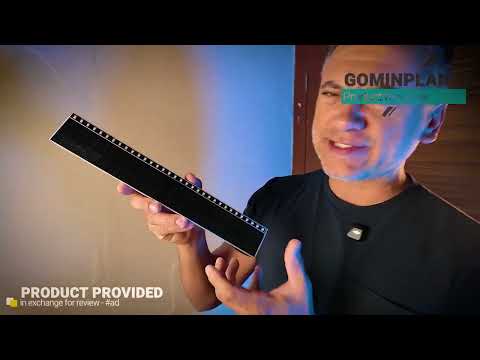
Each light packs 33 individual LEDs. That’s not a typo. Most budget solar step lights run somewhere in the 4-to-10 LED range, which is why they look impressive in a product photo and completely useless at 9pm. The 33-LED configuration means you’re getting a proper spread of light across each step — not a faint glow in the dead center.
The housing is aluminum. That’s worth pausing on. Outdoor products that use plastic housings in tropical climates don’t last. UV radiation, heat cycles, moisture — plastic cracks, warps, and fades. Aluminum doesn’t do any of that. It dissipates heat better, it holds up to weather, and it looks decent mounted on a stair riser without screaming “hardware store solar light.”
The waterproof rating means rain, humidity, and the occasional splash aren’t going to be an issue. In our climate that’s non-negotiable. Something that can’t survive a tropical downpour isn’t getting mounted on our property.
Installation is genuinely zero-wiring. There’s no conduit, no low-voltage transformer, no junction boxes. The lights mount to your stair risers with the included hardware, the solar panel charges the internal battery during the day, and a built-in sensor triggers the LEDs automatically once ambient light drops at dusk. That’s the full setup. We had them mounted and operational in under 20 minutes per light — and we weren’t rushing.
The auto on/off function runs without any intervention. No app, no remote, no timer to configure. It’s a refreshingly simple product in a world where everything is trying to connect to your Wi-Fi.
Night One: The Difference Was Immediate
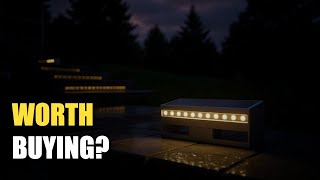
We mounted the first two lights on our primary stair run — the one leading down from our covered terrace to the lower patio area. By the time we’d cleaned up the packaging and had dinner, it was dark. And when we walked out to check on them, the stair edges were properly lit.
Not dimly lit. Not “you can sort of see where you’re going if you already know the layout.” Lit. The kind of brightness that makes you feel like the step is safe to take confidently, not tentatively.
That matters a lot to us because Michelle’s parents visit regularly, and navigating unfamiliar outdoor stairs in the dark is a real concern for guests. The first night the SHONELIGHTING lights were up, her mom commented on how much better the stairs looked. Unprompted. That’s the kind of feedback that tells you a product is doing its job.
The LEDs put out a cool white light, which is sharp and visibility-focused rather than warm and ambient. If you’re after a cozy ambiance, these aren’t that. They’re safety-oriented, which is exactly what stairs need. Warm light is pretty. Cool white light is how you don’t miss the last step at 11pm.
We also tested them across multiple nights, including a stretch of cloudier weather. The performance stayed consistent through two overcast days — the battery clearly holds enough reserve from a full sunny charge to carry you through a couple of low-sun nights without noticeably dimming. That’s genuinely good battery management for a solar product at this price point.
One thing we noted: placement matters for the solar panel. The lights are designed to mount on stair risers, and in some orientations the panel angle might not catch optimal sun depending on how your stairs are oriented. South-facing step risers in the northern hemisphere are ideal. For us in the Caribbean, the sun angle is generous enough that it wasn’t an issue — but if your stairs face primarily north or are shaded by an overhang for most of the day, you’ll want to think about that before ordering a full set.
The Part Most Solar Light Reviews Skip Over
Here’s what the generic roundup posts don’t get into: the real value of solar step lights isn’t the product itself. It’s the math behind what you’re replacing.
We were quoted between $400 and $700 by a local electrician to run low-voltage wired step lighting on our main staircase. That’s before the cost of the fixtures themselves. On top of that, wired landscape lighting draws from your power grid every night, every year, for the life of the installation. It’s not a huge draw, but it’s continuous.
The SHONELIGHTING solar step lights run on zero electricity from your home. The solar panel handles charging. The only ongoing cost is eventually replacing the internal battery if the light is still working years from now — and that’s a hypothetical expense, not a monthly one.
So you’re comparing an installation bill measured in hundreds of dollars against a set of solar lights that go up in minutes and pull no power from your home. That’s not a close comparison for most people. The electrician route has advantages — more consistent output, works regardless of sun, potential for higher wattage lights — but for stair-edge safety lighting where the goal is just reliable visibility at night, the solar math wins easily.
Budget solar lights have conditioned people to expect bad performance and short lifespans. The aluminum build and the 33-LED count here are specifically what separates this product from that category. There’s a real jump in output and durability over the $8-a-pack plastic solar lights. It’s not subtle.
And the set-it-and-forget-it nature of them is underrated. No timers to reset after power outages. No bulbs to replace. No switches. They just work every night, automatically, which is the only behavior you want from stair lighting.
Get it now
SHONELIGHTING Solar Step Lights
🛒 See Today’s Price on Amazon →This post contains affiliate links. I may earn a commission at no extra cost to you.
The Homeowners Who’ll Get the Most Out of These
If you’ve got outdoor stairs of any kind — deck steps, porch steps, pool steps, garden pathway stairs — and those stairs go dark at night, this product is solving a real problem for you. That’s the core audience and it’s a wide one.
People with rental properties especially. We have a gîte on our property that guests stay in, and stair lighting isn’t optional when you’re responsible for people who aren’t familiar with the layout. Running wired lighting to a rental unit is a whole project. Mounting solar step lights takes an afternoon and requires no coordination with an electrician or permission from a utility company.
Pool owners are another obvious fit. Pool deck steps are wet, often at night, and the combination of water and darkness is where accidents happen. Solar step lights on those risers are one of the simplest safety upgrades you can make to a pool area without touching any electrical.
Older homeowners or anyone with family members who have mobility concerns — these lights pull a lot of weight in that context. Confident footing on a well-lit stair is genuinely different from guessing in the dark. The cooler white output of these lights gives the kind of sharp contrast that makes step edges easy to read.
And look — even if none of those scenarios apply and you just think your front porch steps look like a cave at night, that’s a valid reason to buy them too. They improve the look of a well-maintained outdoor space without any of the installation complexity that normally comes with landscape lighting.
Where they don’t make as much sense: shaded north-facing stairs with very little daily sun, or situations where you need consistent full-brightness output every single night regardless of weather or season. In those cases, wired low-voltage lights are the more reliable call, even with the added cost.
Solar Step Lights vs. Wired Low-Voltage: The Real Trade-Off
This comparison comes up every time someone’s deciding between the two, so let’s be direct about it.
Wired low-voltage step lights — the kind that run off a transformer plugged into an exterior outlet — are the more consistent option in terms of output. They don’t care what the weather was like yesterday. They don’t need to recharge. You flip the timer on and they run. If you’re in a climate with frequent overcast stretches or very short winter days, wired is the more dependable technology.
But getting them installed is a project. You need an exterior outlet nearby, a transformer, the fixture runs, and someone who knows what they’re doing to wire everything up cleanly. If you’re renting, you’re probably not doing any of that. If you’re handy and patient, it’s a weekend DIY job. If neither of those apply, it’s an electrician quote.
The SHONELIGHTING solar lights remove every single one of those friction points. Mount them, face the solar panel toward the sun, and you’re done. For climates with reliable sun — which covers a huge portion of the US, Australia, Southern Europe, and pretty much all of the Caribbean — the solar recharge cycle works consistently enough that you won’t notice a difference in real daily use.
There’s also the battery-powered step light option — no wiring, but you’re swapping batteries every few months. Over a year or two, that cost adds up and the maintenance is annoying. Solar eliminates the swap cycle entirely.
So: wired lights win on consistency. Solar lights win on installation ease, cost, and zero ongoing electricity use. For most homeowners in sunnier climates who just need reliable stair safety lighting, the SHONELIGHTING solar option is the smarter starting point. You can always upgrade to wired later if solar falls short in your specific setup — but solar probably won’t fall short.
A Few Things to Know Before You Install
We’ve been through enough product installs to know that the setup moment is where things go sideways if you haven’t thought it through. Here’s what we’d tell someone about to order a set of these.
Map out where the sun hits your stairs throughout the day before you commit to a mounting position. The solar panel is built into the light body, so it faces whatever direction the riser faces. If that means your panels are pointing away from the sun for most of the day, your charge cycle will be weak. Walk your stairs at noon and check which surfaces are getting direct light. Mount there.
Order more than you think you need. One light per step sounds like enough until you see how much better it looks with lights on every single riser. The price point on these makes it practical to do the full run. Don’t buy two, put them up, love them, and then order more separately a month later. Get the full staircase covered in one shot.
Keep the solar panel clean. Especially in dusty environments or anywhere with pollen seasons, a film of dirt on the panel cuts charging efficiency noticeably. A quick wipe with a damp cloth every few weeks is all it takes. It’s not a big ask.
The first few nights after install, the battery is still going through its initial charging cycles. Don’t judge the brightness on night one before the battery has had several full sun cycles to reach capacity. Give it a few days of good sun before forming your final opinion.
Also — and this is specific to the mounting — use the included hardware on the surface type it’s designed for. Stair risers made of composite decking material may need a pilot hole to get a clean install. Wood risers are straightforward. If you’re mounting to stone or concrete, have the right masonry bit ready before you start.
None of this is complicated. But knowing it going in means your install goes smoothly on the first try rather than requiring a second trip to the hardware store. And that’s the whole point of products like these — you want the solution to be simpler than the problem.
Frequently Asked Questions
Do the SHONELIGHTING solar step lights turn on and off automatically?
Yes. There’s a built-in light sensor that triggers the LEDs at dusk and shuts them off at dawn. You don’t configure anything and there’s no app or remote involved. They just run on their own every night.
How many lights do I need for a standard staircase?
One light per step riser is the clearest approach — each step gets its own illuminated edge. A typical porch staircase with 4-6 steps needs 4-6 lights. Most people who go with one-per-step end up happy they didn’t space them out further.
Will these still work after a couple of cloudy days?
The internal battery holds enough charge from a full sunny day to carry you through 1-2 overcast nights without a dramatic brightness drop. Extended cloudy stretches of 4-5 days will reduce output. For climates with frequent grey winters, wired lighting is more consistent.
Can these be installed on concrete or stone stairs?
Yes, but you’ll need a masonry drill bit to create pilot holes first. The included hardware is designed for wood or composite risers out of the box. It’s a quick job with the right bit — just don’t try forcing the screws into concrete without pre-drilling.
How bright are 33 LEDs compared to typical solar step lights?
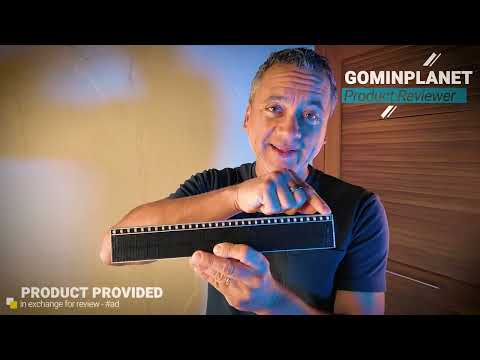
Considerably brighter. Most budget solar step lights use 4-10 LEDs, which produces a faint glow rather than usable visibility. The 33-LED configuration here lights the step edge clearly enough to navigate confidently in full darkness. It’s a real difference, not a marginal one.
Related reviews
- Solar Spotlights With Zero Wiring: What to Know
- Bright Outdoor Lighting Without Wiring: 20-Inch Solar Landscape Lights Review
- These Solar Firefly Lights Work Better Than Expected (We Tested Them in St. Martin)
Are the lights waterproof enough for heavy rain?
They carry a weatherproof rating and the aluminum housing handles rain, humidity, and pooling water far better than plastic alternatives. Tropical downpours, regular coastal humidity, and poolside splash zones are all within scope. We haven’t had weather-related failures.
Get it now
SHONELIGHTING Solar Step Lights
🛒 See Today’s Price on Amazon →This post contains affiliate links. I may earn a commission at no extra cost to you.
About the reviewer
Seb and Michelle
We've tested over 6,500 products in the last 5 years - collaborating with over 4,000 brands and bringing our style of reviews to multiple platforms.