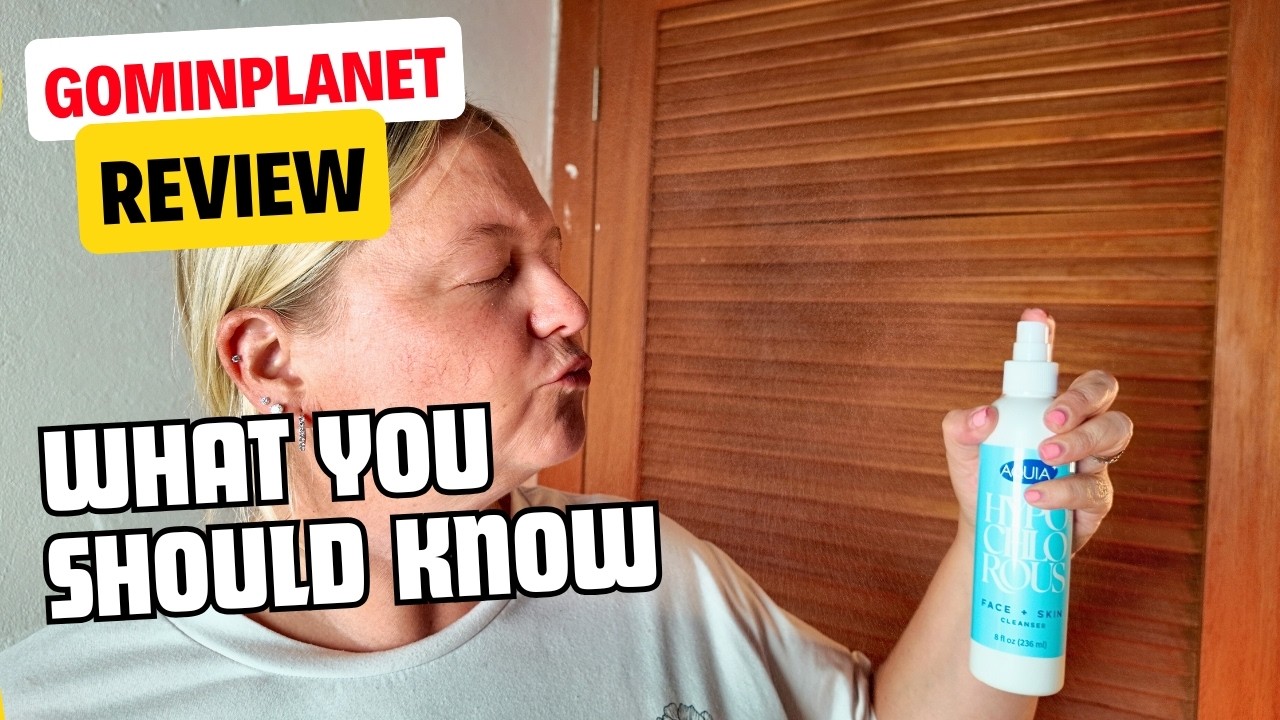
Hypochlorous Acid Face Spray Review: The Sensitive Skin Hack That Actually Works
Passed the toughest possible test: Michelle’s reactive sensitive skin. No burning, no redness, no itching — just a fresh, clean feeling within 3-5 minutes that she described as genuinely better than expected. She is taking this one on the go.
👍 Best for:
- Sensitive, reactive, or acne-prone skin
- Post-gym or sweaty-day face refresh
- Travel skincare when you can’t wash your face
- Calming redness and irritation
Good to know:
- Spray on, leave on — no rinsing needed
- Mild pool-like scent that fades quickly
- Not a moisturiser — hydrate separately
- Safe for daily use
What Is Hypochlorous Acid and Why Is It All Over Skincare Right Now?
Hypochlorous acid (HOCl) is produced naturally by white blood cells as part of the body’s immune response — it is antimicrobial, anti-inflammatory, and compatible with human tissue in a way that synthetic disinfectants are not. In skincare, diluted hypochlorous acid spray targets acne-causing bacteria, calms inflammatory skin conditions like rosacea and eczema, and reduces surface irritation without stripping the skin barrier the way alcohol-based products do. The hypochlorous acid face spray has gone viral in skincare circles for exactly this reason — it does what harsh products do, gently enough for people who cannot tolerate harsh products.
Michelle’s Sensitive Skin Test: Live on Camera
Michelle’s skin is extremely reactive — she documents reactions to products in real time on camera because they happen fast and visibly. She went into this test nervous: the spray has a mild chlorine-like scent that she was not expecting, and she paused after the first application wondering if a reaction was coming. It did not come. Three to five minutes of sitting with the face spray on her skin produced no redness, no burning, no itching — just a sensation she described as “super fresh” and “really really great.” For anyone with equally reactive skin who has had to give up most skincare products, this response is meaningful.
The No-Rinse Use Case: The Real Value
The most compelling use case for hypochlorous acid spray is what Michelle identified immediately: post-gym or mid-day face refreshing when you cannot access a sink. Spray on, let it dry, done. The antimicrobial action works on contact and does not require rinsing to be effective. For people who exercise and then head straight to other commitments, or who travel and want to freshen up between activities, the HOCl spray fills a gap that traditional skincare does not address.
Acne and Ongoing Skin Health
Regular use of hypochlorous acid spray reduces the surface population of acne-causing bacteria (particularly C. acnes) without creating antibiotic resistance the way topical antibiotics can. For mild to moderate acne, consistent daily spraying — morning and evening — is reported to reduce breakout frequency over weeks of use. It pairs well with existing skincare routines as a pre-moisturiser step without interfering with other active ingredients.
FAQ
Does it smell bad?
There is a mild chlorine-like scent on first application that Michelle compared to a swimming pool. It fades within 30-60 seconds of drying. If you are very scent-sensitive, this is worth knowing — but it does not linger.
Can I use it with retinol or acids?
HOCl is pH neutral and generally compatible with other skincare actives. Use it before applying serums or moisturisers rather than over them to ensure it contacts the skin surface effectively.
Final Verdict: 4.5/5
The hypochlorous acid face spray earned its viral status honestly — it works, it is safe for sensitive skin, and it fills a real gap in skincare for people who need something effective without the harshness. Michelle, who reacts to almost everything, had zero reaction and came away genuinely impressed. That is the most credible skincare endorsement possible. Check today’s price on Amazon →