Chain Mail Cast Iron Scrubber Review: We Tested It for 3 Months — Here’s the Truth
The chain mail scrubber genuinely works — and if you cook on cast iron regularly, it will become the only cleaning tool you use. But it has one learning curve that trips up first-time users.
👍 You need this if you:
- Own cast iron or carbon steel cookware
- Struggle with stuck-on bits after cooking
- Want to preserve your seasoning
- Are tired of replacing sponges constantly
❌ Not for:
- Non-stick pans (will scratch the coating)
- Stainless steel or aluminum (overkill)
- Anyone not willing to dry pans immediately
- Delicate ceramic cookware
The Cast Iron Cleaning Problem Nobody Solves Perfectly — Until Now
Cast iron cookware has a cleaning paradox: you need to remove stuck food without removing the seasoning that makes the pan non-stick in the first place. Soap strips seasoning. Abrasive pads are too aggressive. Soft sponges can’t dislodge stuck proteins from high-heat searing. The chain mail cast iron scrubber solves this by being physically abrasive enough to dislodge food particles while being smooth enough not to scratch or strip the polymerized oil layer that forms your seasoning.
After three months of daily use on a Lodge cast iron skillet and a carbon steel wok, we can confirm: this is genuinely the best cleaning solution for cast iron we’ve encountered. Here’s everything you need to know — including the one thing that trips up first-time users.
How Chain Mail Actually Cleans Cast Iron
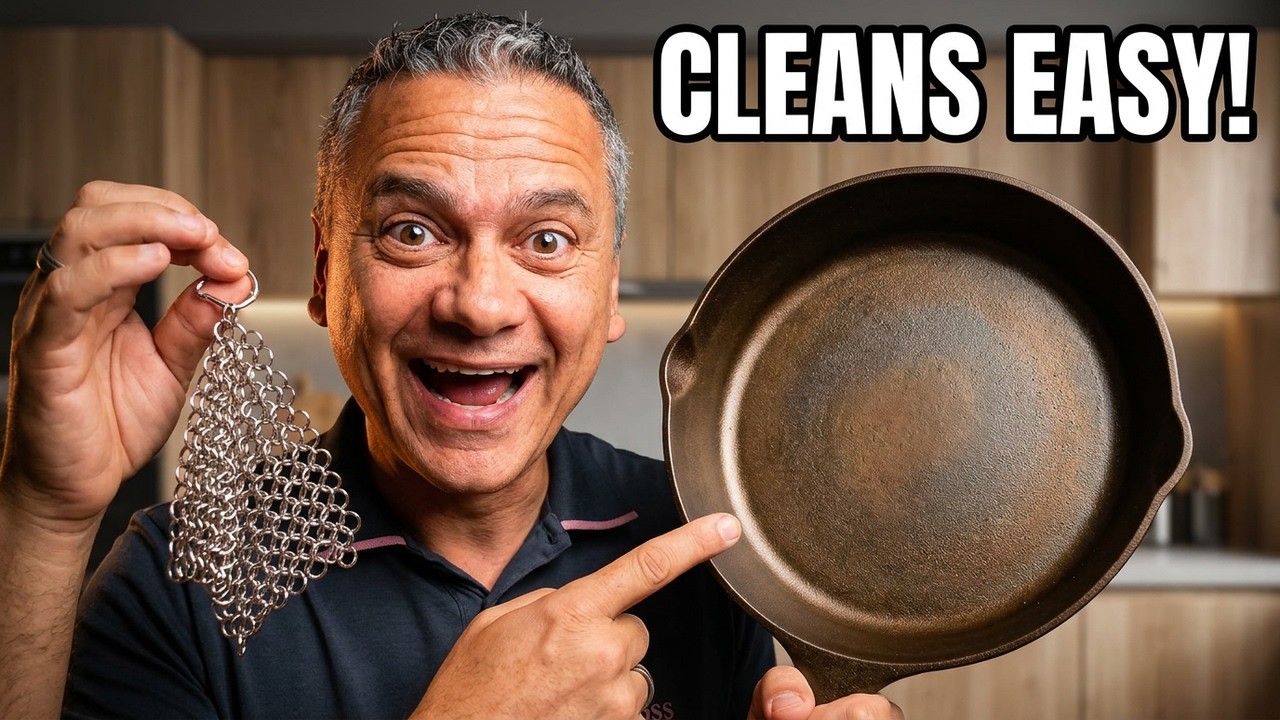
The chain mail scrubber works with hot water and physical scrubbing — no soap required or recommended. The interlocked stainless steel rings create a flexible scrubbing surface with thousands of small edges that mechanically dislodge food particles without digging into the seasoning layer beneath. After scrubbing, rinse with hot water until the water runs clear, then dry the pan immediately and thoroughly — either with a towel or a quick minute on a burner — and apply a thin wipe of oil before storing.
The learning curve first-time users hit: using it on a cold or room-temperature pan. Chain mail works dramatically better on a pan that’s still warm from cooking. The residual heat keeps food particles loose and soft, making scrubbing effortless. Letting the pan cool completely before cleaning means particles have hardened and bonded more firmly — you’ll work harder for the same result. Scrub while the pan is warm and you’ll be done in under a minute.
Three Months of Daily Testing: What We Found
Month one was the adjustment period. We occasionally reached for old habits — a paper towel instead of the scrubber, or a brief rinse without a full clean. Once we committed to the chain mail routine exclusively, the results were consistent: pans cleaned completely in 30-60 seconds of scrubbing, seasoning intact, no rust developing between uses. Eggs began sliding out of the skillet with less oil by month two — a direct result of better-maintained and undisturbed seasoning.
The chain mail scrubber itself shows essentially zero wear after three months. Stainless steel rings don’t rust, don’t flatten, don’t lose their scrubbing effectiveness. This is genuinely a lifetime kitchen tool — unlike sponges that need replacing monthly or plastic scrubbers that wear down. The upfront cost makes sense when you calculate the sponge replacement cost over even a year.
What About Soap? The Ongoing Debate
The cast iron community is divided on soap. The traditional advice — never use soap — stems from the era of harsh lye-based soaps that did strip seasoning aggressively. Modern dish soaps are gentler and occasionally acceptable for heavy cleaning. That said, using the chain mail scrubber with hot water alone handles 95% of cleaning tasks without needing soap at all, which makes the entire debate largely irrelevant once you have this tool in your rotation.
Frequently Asked Questions
Will it scratch my cast iron seasoning?
No — the smooth stainless rings mechanically dislodge food particles without digging into the polymerized oil seasoning layer. This is the key difference between chain mail and abrasive scrub pads.
Can I use it on non-stick pans?
No. Chain mail will scratch and permanently damage PTFE non-stick coatings. Use it only on cast iron, carbon steel, and uncoated stainless steel.
Does it rust?
The scrubber itself is stainless steel and won’t rust. Rinse after use, shake off water, and store dry. It will outlast any other cleaning tool in your kitchen.
How long does a chain mail scrubber last?
Effectively indefinitely with basic care. Stainless steel rings don’t degrade with use. This is a one-time purchase that should last 10+ years of regular use.
Final Verdict: 5/5
If you own cast iron or carbon steel cookware, the chain mail cast iron scrubber is the last cleaning tool you’ll ever buy for those pans. It’s faster than a sponge, gentler on seasoning than any other abrasive, and completely eliminates the “how do I clean this without ruining it” anxiety that follows every cast iron cooking session. Buy it once, keep it forever, cook better. Check today’s price on Amazon →